Last updated 2026-07-24
TL;DR
PT-141 (bremelanotide) is injected subcutaneously, usually in the thigh or abdomen, at least 45 minutes before sexual activity. The FDA-approved autoinjector (Vyleesi) delivers a fixed 1.75 mg dose, no mixing needed. Compounded vials require reconstitution with bacteriostatic water and a dosing syringe. Expect nausea and flushing; the mechanism is central (brain), not vascular.
What is PT-141 and how is it different from Viagra-type drugs?
PT-141 is the research name for bremelanotide, the same molecule sold under the brand Vyleesi after FDA approval in 2019 for hypoactive sexual desire disorder (HSDD) in premenopausal women [1]. It does not work like sildenafil or tadalafil. Those drugs act on blood vessels, relaxing smooth muscle so blood flow increases. PT-141 works upstream of that, in the brain. Bremelanotide is a melanocortin receptor agonist. It activates MC4 receptors in the hypothalamus, the part of the brain involved in generating sexual desire itself, more than the physical mechanics of arousal [2]. That's why it's sometimes described as treating the "want to" rather than the "can I." A 2022 review in CNS Spectrums lays out this neurobiology directly, tying MC4R activation to desire pathways rather than vascular ones [2]. This distinction matters for expectations. A vasodilator can produce a physical response within an hour regardless of mental state. A centrally-acting drug is slower and less predictable, and it doesn't guarantee arousal just because you've taken it. Some clinical reviewers have pushed back hard on how meaningful the desire improvement actually is in practice, which we cover honestly later in this piece [3].
How do you inject PT-141? Step by step
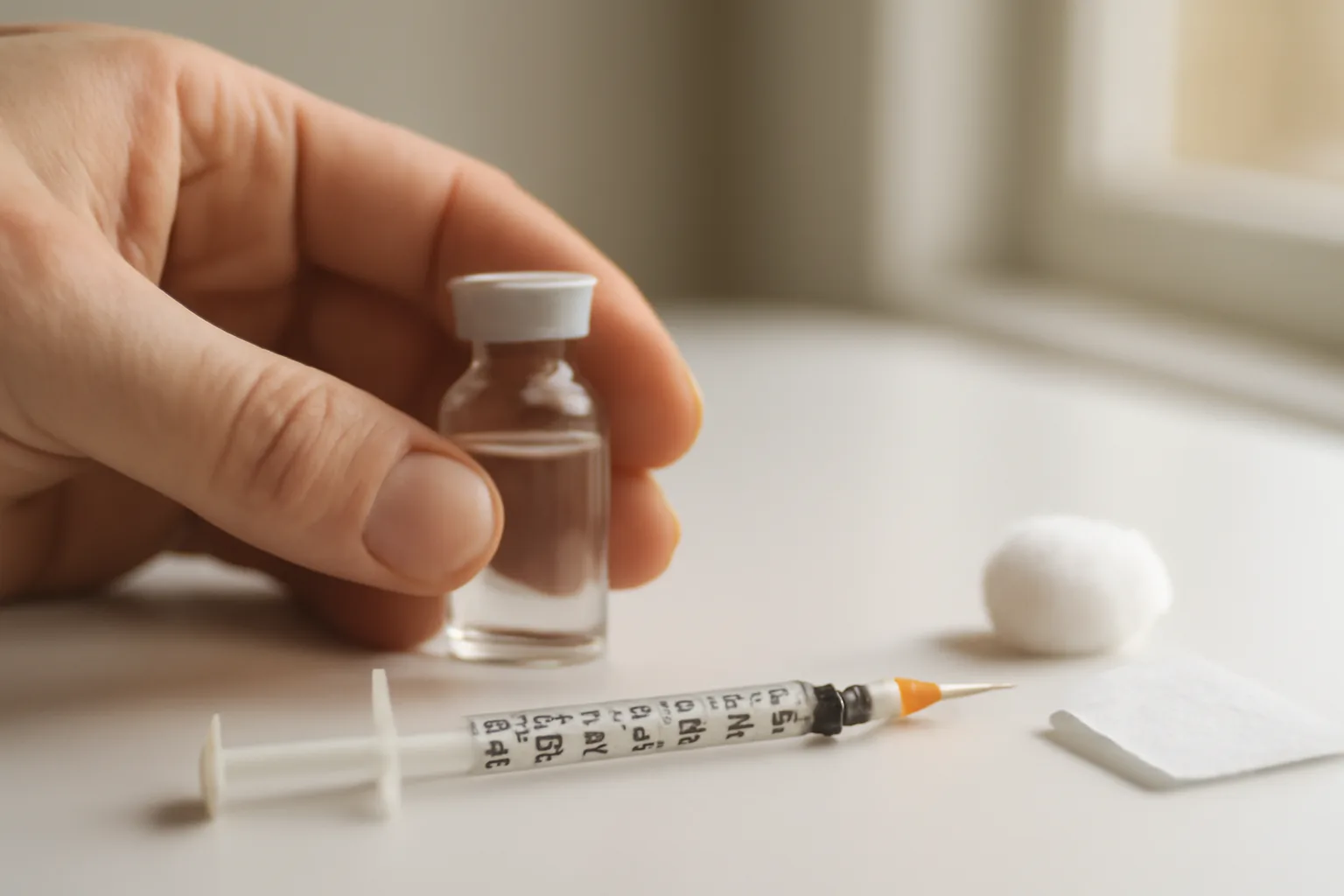
PT-141 injection is subcutaneous, meaning it goes into the fatty layer just under the skin, not into muscle. The approved product, Vyleesi, comes as a pre-filled single-use autoinjector so there's no drawing up a dose [4]. Compounded bremelanotide, by contrast, typically comes as a multi-dose vial that needs a separate syringe. General steps for a subcutaneous PT-141 injection: 1. Wash your hands and clean the injection site (abdomen or front of thigh is standard) with an alcohol swab. 2. Let the alcohol dry fully, about 10-15 seconds. Injecting through wet alcohol stings more. 3. Pinch a fold of skin between two fingers. 4. Insert the needle at roughly a 45 to 90 degree angle depending on your body fat at the site and needle length. 5. Push the plunger slowly and steadily. 6. Withdraw the needle, apply light pressure with a clean gauze or cotton ball. Don't rub. 7. Dispose of the needle in a sharps container, never in household trash. Rotate injection sites between doses (alternate sides of the abdomen or thigh) to avoid soreness or lumps building up in one spot. Site rotation is standard practice for any repeated subcutaneous injection, not unique to bremelanotide. For exact volumes at different concentrations, see our PT-141 dosage chart and dosage calculator.
How do you reconstitute PT-141 from a vial?
Reconstitution means adding liquid to a freeze-dried (lyophilized) powder to turn it back into an injectable solution. Compounded PT-141 vials arrive as powder because bremelanotide is more stable in that form. The approved Vyleesi autoinjector skips this step entirely since it's pre-mixed at the factory [4]. If you're working from a compounded vial, the general process looks like this: wipe the rubber stopper with an alcohol swab, draw the stated volume of bacteriostatic water (not plain sterile water, since the preservative in bacteriostatic water helps the mixed solution last longer once opened) into a syringe, then inject it slowly down the inside wall of the vial rather than directly onto the powder. Swirl gently, don't shake. Shaking can damage the peptide structure. The amount of water you add determines your final concentration, which then determines how many units on an insulin syringe equal your target milligram dose. This is where most dosing errors happen, not in the injection itself. Get the math wrong at this stage and every subsequent dose is off. We built the PT-141 dosage calculator specifically because this step trips people up. One honest caveat here: because compounded bremelanotide isn't the FDA-reviewed product, the reconstitution instructions, storage stability, and even the purity of the powder aren't standardized the way Vyleesi's manufacturing is. The clinical trial data referenced throughout this article was generated using the studied formulation, not compounded versions [5].
What is the correct PT-141 dose, and when do you take it?
The FDA-approved dose studied in the key RECONNECT trials is 1.75 mg by subcutaneous injection, taken as needed, at least 45 minutes before anticipated sexual activity [5]. It is not a daily drug and not something you take on a schedule. Dosing limits from the approved label and trial protocols: no more than one dose within 24 hours, and no more than 8 doses per month [4] [5]. This ceiling exists partly because bremelanotide can raise blood pressure transiently, and repeated closely-spaced dosing was associated with more sustained blood pressure elevation in trial monitoring [6]. In the two Phase 3 RECONNECT trials (n=1,247 combined across both studies), women self-administered the dose at home, on their own timing, rather than on a fixed protocol, and outcomes were tracked using validated desire and distress scales over 24 weeks [5]. A subgroup analysis of the same RECONNECT data later looked at whether age, menopausal proximity, or baseline desire severity changed the response, and found the effect direction was generally consistent across subgroups, though effect sizes remained modest [7]. There is no evidence that using it more frequently or at a higher dose than 1.75 mg improves outcomes, and doing so is more likely to just increase nausea and blood pressure effects.
How long does PT-141 take to work, and how long does it last?
In trial dosing, bremelanotide was taken at least 45 minutes before sexual activity, which reflects the time needed for the central nervous system effect to build [5]. It is not an immediate on-demand drug the way sildenafil can act within 30-60 minutes for its vascular effect. Duration of effect in the label and clinical literature is generally described in terms of hours, with effects (including side effects like nausea and blood pressure changes) able to persist for several hours after dosing [4] [6]. This is one reason the 24-hour minimum spacing between doses exists. Because the drug is acting on brain receptors tied to motivation and desire rather than producing a mechanical, on/off physical effect, the subjective timing of "it's working" varies a lot between individuals and isn't as sharply defined as an erectile response would be.
What side effects should you expect, and how bad is the nausea?
Nausea is the single most common side effect of bremelanotide, and it is not rare. Across the clinical development program safety analysis, nausea occurred substantially more often with bremelanotide than placebo, and it was the leading reason patients discontinued treatment in trials [6]. Flushing and headache are also common. Don't minimize this. If you've read marketing copy calling nausea "mild," the actual safety profile paper pooling the full development program is a better source, and it's blunt that gastrointestinal effects, primarily nausea, drove real discontinuation rates [6]. Some people find it drops off with repeated dosing as tolerance builds; others don't get relief and stop the drug for this reason alone. Other effects reported in the trials and safety literature include injection site reactions (redness, swelling, discoloration that can persist), transient increases in blood pressure and decreases in heart rate shortly after dosing, and in a portion of long-term users, focal hyperpigmentation (darkening patches of skin, notably on the face, gums, or breasts) tied to bremelanotide's activity on melanocortin-1 receptors, which also control pigmentation [4] [6]. This pigmentation can be slow to fade and, in some cases, may not fully reverse after stopping. The Medical Letter's independent review of Vyleesi at approval echoed this, describing nausea as the dominant tolerability issue and noting the blood pressure signal as a reason it's not recommended for women with uncontrolled hypertension or known cardiovascular disease [8]. For the full side effect breakdown by frequency, see PT-141 peptide side effects.
Who should not use PT-141?
Bremelanotide is not recommended for anyone with uncontrolled high blood pressure or known cardiovascular disease, because of the transient blood pressure spikes seen after dosing [4] [9]. A 2022 review on managing hypertension alongside female sexual dysfunction specifically flags this interaction as something clinicians need to screen for before prescribing [9]. It is also not approved for use in postmenopausal women or in men; the FDA approval and the RECONNECT trial population were specifically premenopausal women with acquired, generalized HSDD [5]. Using it outside that studied population means you're outside the evidence base entirely, and any claims about male libido use are not backed by the trial data those approvals rest on. Women with uncontrolled hypertension, known cardiovascular disease, or who are pregnant were excluded from or not studied in the key trials, and the label reflects that exclusion [4]. If you have any cardiovascular risk factors, this is a conversation for a prescriber, not a decision to make from a forum post.
Does PT-141 actually work? What the trial data really shows
Here's where honesty matters more than marketing. The two Phase 3 RECONNECT trials found statistically significant improvements in the co-primary endpoints, a validated desire score (FSFI-D) and a distress score (FSDS-DAO item 13), compared to placebo [5]. That's the basis for FDA approval. But "statistically significant" and "clinically meaningful" aren't the same thing, and this is exactly the argument raised by critics. A 2021 reanalysis published in the Journal of Sex Research argued that the absolute size of the improvement over placebo was small, and questioned whether it reflects a difference most women would actually notice in daily life [10]. A follow-up 2024 piece in the same journal, titled bluntly "Small Effects, Questionable Outcomes," pressed the same point further [3]. A 2021 piece in Drug and Therapeutics Bulletin went as far as calling the regulatory comparison to flibanserin (Addyi, the other FDA-approved HSDD drug) a "fallacy of regulatory precedent," arguing that approving a second drug with modest effect size shouldn't be seen as confirming the first was a good idea either [11]. Our honest read: bremelanotide produced a real, measurable, FDA-recognized effect in a specific population (premenopausal women with acquired HSDD) under trial conditions. It is not a guaranteed fix, the effect size is modest by the trial's own numbers, and the side effect burden (specifically nausea) is real enough that a meaningful share of trial participants stopped taking it. Go in with that calibration, not hype.
Is PT-141 legal to buy, and what's the difference between Vyleesi and compounded PT-141?
Vyleesi is the FDA-approved brand name, manufactured under full FDA review and listed in the Drugs@FDA database [12]. It's available by prescription for the specific approved indication (HSDD in premenopausal women). Compounded bremelanotide is different. Under 21 U.S.C. 353a, licensed pharmacies can compound drugs from bulk substances for an individual patient with a valid prescription, but bremelanotide's regulatory status for 503A compounding has been debated, and FDA maintains specific bulk substance lists under 21 CFR 216.23 and 216.24 that govern what can legally be compounded [13] [14] [15]. FDA also publishes a running list of substances nominated for compounding consideration, which is worth checking directly rather than trusting a seller's claim [16]. The practical difference for a reader: Vyleesi went through Phase 3 trials, has an FDA label, and its exact manufacturing is controlled. Compounded PT-141 has not been through that same review process as a finished product, even if the underlying peptide is chemically the same molecule. Purity, concentration accuracy, and sterility depend entirely on the individual compounding pharmacy. This is also why we'd steer clear of PT-141 bought through general marketplaces rather than a licensed pharmacy; see our breakdown of PT-141 peptide for sale on Amazon for why that channel specifically is not where you want to source an injectable peptide.
How should PT-141 be stored?
Vyleesi's autoinjector should be stored according to its label conditions and kept until you're ready to use it; it's a single-use device, so there's no reconstituted solution to manage or store between doses [4]. Compounded PT-141 in vial form is different once reconstituted. Peptides in solution generally degrade faster than in lyophilized powder form, and are typically kept refrigerated (not frozen) between doses, used within a defined window recommended by the compounding pharmacy, and protected from light. Bacteriostatic water's preservative helps but doesn't make the solution stable indefinitely. Any cloudiness, discoloration, or visible particles in a reconstituted vial is a reason to discard it rather than inject it. This is standard practice for any injectable peptide solution, not specific to bremelanotide.
What does PT-141 have to do with weight or appetite?
This surprises people, but it's worth understanding because it shapes the side effect picture. The melanocortin system, specifically MC4R, is also a major target in obesity and metabolic research, entirely separate from its sexual desire effects [17]. MC4 receptor activation in the hypothalamus affects appetite and energy balance, which is part of why melanocortin agonists are being studied for weight management too. Directly relevant to bremelanotide: two Phase 1 randomized controlled trials specifically looked at bremelanotide's effect on body weight in obese women, finding weight changes associated with dosing, distinct from its approved sexual desire indication [18]. This isn't a reason to use PT-141 off-label for weight loss (it isn't approved or dosed for that), but it does explain part of the nausea and appetite-related side effects some users report, since the same receptor pathway governs both.
Frequently asked questions
How do you use PT-141 peptide for the first time?
Start with the lowest effective dose your prescriber recommends (the approved dose is 1.75 mg), inject subcutaneously in the abdomen or thigh, and time it at least 45 minutes before anticipated sexual activity [4][6]. Expect possible nausea or flushing on the first dose; some people tolerate it better after a few uses as the body adjusts.
How do you reconstitute PT-141 powder?
Add bacteriostatic water to the vial by injecting it slowly down the inside wall, not directly onto the powder, then swirl gently without shaking. The volume of water added determines your final concentration, which then determines your injection volume for a target milligram dose. Getting this ratio wrong is the most common dosing mistake with compounded vials.
How do you inject PT-141 correctly?
Clean the injection site with alcohol, let it dry, pinch a fold of skin, and insert the needle at a 45 to 90 degree angle into the subcutaneous fat layer (not muscle). Push the plunger slowly, withdraw, and apply light pressure without rubbing. Rotate sites between doses and dispose of needles in a sharps container.
How much PT-141 should you inject?
The FDA-approved dose studied in the RECONNECT Phase 3 trials is 1.75 mg subcutaneously, no more than once every 24 hours and no more than 8 times per month [4][6]. There's no trial evidence that higher or more frequent dosing improves results; it mainly raises the risk of nausea and blood pressure effects.
Does PT-141 hurt when injected?
Subcutaneous injections are generally mild in discomfort compared to intramuscular shots, but injection site reactions including redness, swelling, or discoloration are documented in the safety data across the bremelanotide development program [7]. Letting alcohol dry fully before injecting and rotating sites reduces soreness.
How long before it works, and how long does the effect last?
Trial protocol had women dose at least 45 minutes before anticipated sexual activity, reflecting the time needed for the central nervous system effect to develop [6]. Effects, including side effects like nausea and blood pressure changes, can persist for several hours, which is part of why dosing is capped at once per 24 hours.
Why does PT-141 cause nausea?
Bremelanotide activates melanocortin receptors broadly, including pathways tied to nausea and appetite regulation, more than the desire-related MC4 pathway in the hypothalamus [2][7]. Nausea was the most common adverse event across the clinical development program and the leading cause of trial discontinuation.
Is PT-141 the same as Vyleesi?
Vyleesi is the FDA-approved brand name for bremelanotide, delivered as a pre-filled single-use autoinjector at 1.75 mg [4]. "PT-141" is the earlier research code name for the same molecule, often used for compounded, non-FDA-approved versions sold through different channels.
Can men use PT-141?
The FDA approval and the RECONNECT Phase 3 trials studied only premenopausal women with hypoactive sexual desire disorder [6]. Male use is outside the approved indication and outside the studied evidence base, so dosing and safety data specific to men aren't established the same way.
Can you drink alcohol with PT-141?
There's no specific trial data cited in the approved label's core efficacy findings addressing alcohol interaction directly, but since nausea and blood pressure changes are already common side effects, and alcohol can independently affect blood pressure and nausea, it's reasonable to be cautious and discuss it with a prescriber.
What happens if you use PT-141 too often?
The approved dosing cap is one dose per 24 hours and no more than 8 per month, a limit tied to blood pressure monitoring during trials showing repeated dosing sustained elevated blood pressure readings [7]. Using it more frequently than studied isn't backed by safety data and raises cardiovascular risk without evidence of added benefit.
Does PT-141 actually increase desire, or is the effect small?
The RECONNECT trials found statistically significant improvement over placebo on validated desire and distress scores, which supported FDA approval [6]. Independent reanalyses in the Journal of Sex Research argue the absolute effect size is small and may not be clinically meaningful for many women, so expectations should be modest [3][12].
Sources
- Drugs, 2019 - Bremelanotide: First Approval: Bremelanotide was FDA approved in 2019 as Vyleesi for hypoactive sexual desire disorder in premenopausal women
- CNS Spectrums, 2022 - The neurobiology of bremelanotide: Bremelanotide activates MC4 receptors in the hypothalamus, acting on central desire pathways rather than vascular mechanisms
- Journal of Sex Research, 2024 - Small Effects, Questionable Outcomes: Critical analysis argues bremelanotide's clinical trial effects are small and outcomes questionable
- Annals of Pharmacotherapy, 2020 - Bremelanotide: New Drug Approved for HSDD: Vyleesi is delivered via pre-filled single-use autoinjector; label details on dosing frequency, cardiovascular contraindications, and injection site reactions
- Obstetrics and Gynecology, 2019 - Bremelanotide for HSDD: Two Randomized Phase 3 Trials: Key RECONNECT Phase 3 trial data used the studied formulation of bremelanotide, not compounded versions
- Journal of Women's Health, 2022 - Safety Profile of Bremelanotide Across the Clinical Development Program: Nausea was the most common adverse event and leading cause of discontinuation; repeated dosing associated with sustained blood pressure elevation; hyperpigmentation reported with long-term use
- Journal of Women's Health, 2022 - Prespecified and Integrated Subgroup Analyses from RECONNECT: Subgroup analyses of RECONNECT data found consistent effect direction across age and baseline severity subgroups, with modest effect sizes
- The Medical Letter on Drugs and Therapeutics, 2019 - Bremelanotide (Vyleesi) for HSDD: Independent review describes nausea as the dominant tolerability issue and flags blood pressure signal as a reason to avoid use in uncontrolled hypertension
- Medicina (Kaunas), 2022 - Management of Hypertension with Female Sexual Dysfunction: Clinical guidance flags bremelanotide's blood pressure effects as a screening concern before prescribing to women with hypertension
- Journal of Sex Research, 2021 - Re-Analyzing Phase III Bremelanotide Trials: Independent reanalysis argues the absolute effect size over placebo in Phase 3 trials is small and may not be clinically meaningful
- Drug and Therapeutics Bulletin, 2021 - Bremelanotide and flibanserin: the fallacy of regulatory precedent: Article argues that approving a second modest-effect HSDD drug shouldn't be read as validating the first
- Drugs@FDA, FDA-approved drug products database: Vyleesi is listed as an FDA-approved drug product manufactured under full FDA review
- 21 U.S.C. 353a, pharmacy compounding: Licensed pharmacies may compound drugs from bulk substances for individual patients under specific statutory conditions
- 21 CFR 216.23, the final 503A Bulks List: FDA maintains a list of bulk drug substances that can be used in 503A compounding
- 21 CFR 216.24, the 503B Bulks List: FDA maintains a separate bulk drug substances list governing 503B outsourcing facility compounding
- FDA, bulk drug substances nominated for use in compounding: FDA publishes a running list of substances nominated for compounding consideration that readers can check directly
- Nature Reviews Endocrinology, 2023 - Targeting the central melanocortin system for metabolic disorders: MC4 receptor activation in the hypothalamus affects appetite and energy balance, separate from its sexual desire effects
- Diabetes, Obesity & Metabolism, 2022 - Effect of bremelanotide on body weight of obese women: Two Phase 1 randomized controlled trials found bremelanotide dosing associated with body weight changes in obese women