Last updated 2026-07-25
TL;DR
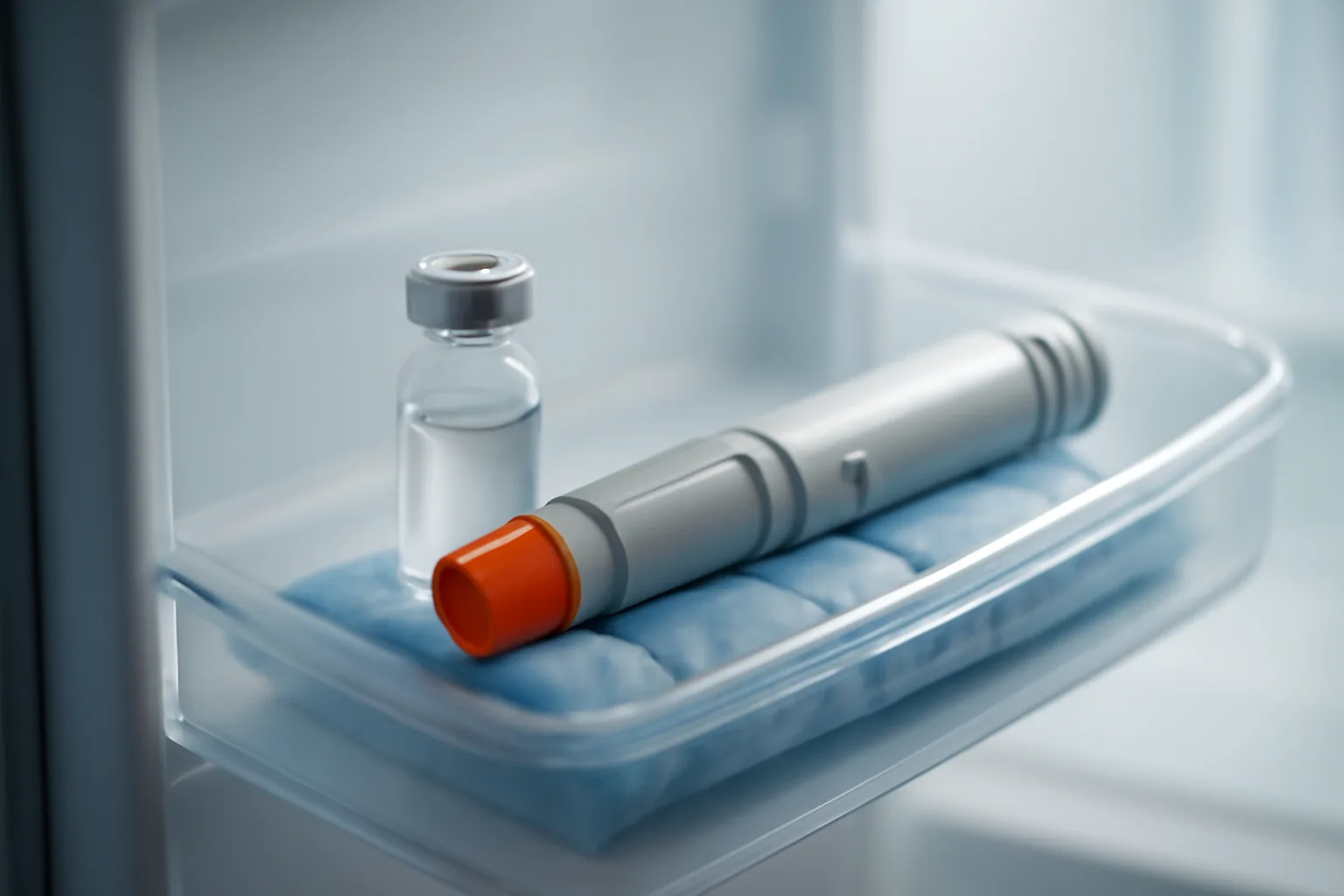
Unopened bremelanotide powder or solution generally needs refrigeration (36-46°F) until use. Vyleesi's single-use auto-injector is stored at room temperature and used once, so refrigeration isn't part of the patient instructions for that product. Compounded vials are a different story: follow your pharmacy's label exactly, since stability data varies by formulation.
does PT-141 need to be refrigerated before use?
It depends on what form you have. Vyleesi, the FDA-approved bremelanotide product, comes as a pre-filled, single-use auto-injector. It's approved for a specific indication, hypoactive sexual desire disorder in premenopausal women, based on two Phase 3 trials (the RECONNECT studies) [1]. Vyleesi's packaging is designed to be stable at controlled room temperature until the expiration date, which is why the patient labeling doesn't tell people to keep it in the fridge. Compounded bremelanotide, the kind dispensed as a vial of lyophilized (freeze-dried) powder or a liquid solution from a compounding pharmacy, is a different situation. Peptides in general are less chemically stable than small-molecule drugs, and manufacturers of injectable peptides commonly specify refrigerated storage (typically 2-8°C, or 36-46°F) for both the unreconstituted powder and the mixed solution. If your bremelanotide came from a compounding pharmacy, the vial label is the actual authority, not a general assumption. Different pharmacies use different formulations, preservatives, and diluents, so a one-size answer doesn't hold up. The safest habit: read the label every time, and if it doesn't say, call the pharmacy. Don't guess based on what you read about a different peptide or a different supplier.
how should unopened PT-141 be stored?
For compounded lyophilized powder, refrigeration at 36-46°F (2-8°C) is the typical instruction, and the vial should stay out of direct light. Freezing is usually not recommended for reconstituted peptide solutions because repeated freeze-thaw cycles can degrade the peptide structure, though the unmixed lyophilized powder is often more freeze-tolerant, again, check the label. For the FDA-approved Vyleesi auto-injector, the product is designed for room-temperature storage prior to use. This is one of the practical advantages of an approved, manufactured product over a compounded one: the stability data has been generated and reviewed as part of the approval process, so the storage instructions on the label reflect actual testing rather than a general peptide-handling assumption. Either way, keep the product away from heat sources, cars in summer, windowsills, gym bags left in direct sun. Peptide degradation from heat isn't usually dramatic or obviously visible, so there's no reliable way to look at a vial and know it's gone bad from a heat exposure. That's part of why sourcing through a provider-reviewed pathway matters: you want confidence in how the product was handled before it reached you, more than after.
does bremelanotide need refrigeration after it's mixed (reconstituted)?
Yes, generally. Once a lyophilized peptide is reconstituted with bacteriostatic water or another diluent, it becomes a solution that is chemically less stable over time than the freeze-dried powder was. Most compounding pharmacies instruct patients to keep the reconstituted vial refrigerated and to use it within a defined window, commonly somewhere in the range of 2 to 4 weeks, though this varies by pharmacy and formulation and should always be confirmed against your specific label. This is a case where the general peptide-handling logic (keep it cold, protect it from light, don't shake it violently) applies, but the exact numbers, use-by day, allowed temperature range, are formulation-specific. Two patients getting bremelanotide from two different compounding sources could reasonably have different instructions, and both could be correct for their own vial. If you've lost the paperwork or the pharmacy didn't give a clear window, don't just estimate. Call and ask. This isn't a place to save time by assuming.
what if PT-141 was left out of the fridge accidentally?
A short lapse, a few hours at room temperature during transport, for example, is unlikely to destroy a peptide's activity outright, but there's no published data specific to bremelanotide quantifying exactly how much potency is lost at a given time and temperature outside the fridge. The honest answer is that nobody has a precise number for this, and manufacturers build in some margin, but margin isn't the same as unlimited tolerance. If the product was left out for an extended period (overnight, in a hot car, for many hours), the conservative move is to treat it as compromised and not use it, then talk to the prescribing provider or pharmacy about a replacement. This is a cost issue, more than a safety one, wasting a dose because of a shipping mishap is frustrating, but using a degraded dose and getting an unpredictable or absent response is worse, especially for a drug where response already varies significantly between individuals: in the RECONNECT trials, roughly 25% of women on bremelanotide reported meaningful improvement in desire versus around 17% on placebo, a real but modest effect size [1]. You don't want a storage mistake muddying whether it's working.
why is bremelanotide temperature-sensitive in the first place?
Bremelanotide is a peptide, a short chain of amino acids, and peptides are generally more fragile than the small synthetic molecules used in most pills. Heat, light, and repeated agitation can break peptide bonds or cause the molecule to unfold (denature), which can reduce or eliminate its ability to bind its target receptor. Bremelanotide works by activating melanocortin receptors, specifically MC4R, in the central nervous system, this is a fundamentally different mechanism from drugs like sildenafil, which act locally on blood vessels [2]. Central nervous system activity depends on the molecule reaching the brain intact and functional; a peptide that has degraded in a hot glovebox for two weeks isn't going to deliver a reliable dose, even if it looks and smells the same as it did on day one. The melanocortin system also has broader roles beyond libido, including in metabolic regulation, which researchers are studying separately from the sexual desire indication [3]. None of that changes the storage math: it's still a peptide, and peptides need careful handling to stay active. This is also why a batch synthesis problem or an improperly stored shipment isn't something a patient can detect visually. The vial won't turn colors or grow anything. It'll just possibly not work as well, which is a hard thing to notice in a drug whose effect is already subtle and self-reported.
does PT-141 storage affect how well it works?
In theory, yes, degraded peptide means less active drug reaching receptors, which could show up as reduced or absent effect. In practice, there's no dedicated published study measuring bremelanotide's real-world potency loss at specific storage failure points, so what follows is general peptide chemistry logic, not a bremelanotide-specific finding. What is well documented is that bremelanotide's effect size is modest even under ideal trial conditions. A widely discussed reanalysis of the Phase 3 data argued that the actual difference between drug and placebo was smaller than headline responder-rate numbers suggested, and questioned whether the improvement was clinically meaningful for the average patient . A separate critical commentary in the same vein argued the regulatory bar used for bremelanotide (following the precedent set by flibanserin) may not have reflected a strong risk-benefit case . Given that the drug's real-world effect is already a subject of debate among researchers, storage problems are one more variable that could make an already modest response even harder to see. This is one more reason not to cut corners on how the product is stored and handled before use, and to have realistic expectations about the size of effect even when everything goes right.
how long does PT-141 last once opened or reconstituted?
For the Vyleesi auto-injector, the product is single-use: each injector delivers one dose and is discarded after use, there is no 'once opened, use within X days' question because there's nothing left to store. This single-use design also sidesteps reconstitution and multi-dose stability entirely, one less variable for the patient to manage. [4][5] For compounded multi-dose vials, the use-by window after reconstitution varies by pharmacy, but a common range cited by compounding pharmacies for peptide solutions is roughly 2 to 4 weeks under refrigeration. Some pharmacies specify shorter windows, others longer, depending on their formulation and any added preservatives. This variability is exactly why the label instructions from your specific pharmacy override any general number found online. For guidance on how dosing and cycle timing interact with vial life, see PT-141 dosage and PT-141 cycle length.
can PT-141 be shipped without refrigeration?
Short-duration cold-chain shipping (with ice packs or gel packs in an insulated container) is standard practice for peptide products traveling by mail, and reputable pharmacies and providers build this into their fulfillment process. A well-packed shipment lasting one to two days typically keeps the product within an acceptable temperature range even without active refrigeration the entire time. What you want to check on arrival: was the package cold to the touch, were the ice packs still at least partially frozen or cool, was the vial or injector intact. If a shipment arrives warm, with melted packaging and no cooling elements left, that's worth flagging to whoever fulfilled the order rather than assuming it's fine. This is part of why the sourcing pathway matters as much as the drug itself. A provider-reviewed process, where a clinician confirms the prescription is appropriate and the product is dispensed by a pharmacy accustomed to peptide handling and shipping, reduces the odds of a storage failure reaching the patient in the first place. Bremelanotide Rx points readers toward that kind of reviewed pathway rather than unregulated sources precisely because storage and handling failures are invisible until the drug simply doesn't work.
what's the difference between Vyleesi storage and compounded PT-141 storage?
Vyleesi is the FDA-approved bremelanotide product, first approved in 2019 for premenopausal women with acquired, generalized hypoactive sexual desire disorder [4][5]. As an approved drug, its manufacturing, stability testing, and storage instructions went through FDA review, and its labeling reflects data generated specifically for that formulation and delivery device. Compounded bremelanotide is prepared by a compounding pharmacy under different rules. Compounded drugs are not FDA-approved products, and their bulk substances are governed separately under frameworks like 21 U.S.C. 353a and the FDA's bulk drug substance lists for 503A and 503B facilities [6][7][8][9]. FDA maintains lists of substances nominated and evaluated for compounding use, and inclusion or status on those lists can change [10]. None of this means compounded bremelanotide is automatically unsafe, but it does mean the storage and stability instructions come from the individual pharmacy's own testing or industry practice, not from an FDA-reviewed label. That's a meaningful difference when you're trying to answer a specific question like 'how many days can this sit in my fridge door.' Practically: if you have Vyleesi, follow the printed patient information that comes with the auto-injector. If you have a compounded vial, follow that pharmacy's label and ask directly if anything is unclear.
what temperature range counts as 'refrigerated' for PT-141?
'Refrigerated' for injectable peptides typically means standard household refrigerator temperature, about 36-46°F (2-8°C), not the freezer and more than 'the cold part of the fridge door.' The back of the main compartment, away from the door and away from the freezer unit, tends to hold the most stable temperature in most home refrigerators. Avoid the freezer for reconstituted (mixed) peptide solutions unless a pharmacy specifically instructs otherwise, freeze-thaw cycling can physically damage peptide structure. Lyophilized (unmixed) powder is generally more tolerant of temperature swings than the reconstituted liquid, but 'more tolerant' isn't the same as 'fine at room temperature indefinitely.' If you're traveling, a small insulated bag with a gel pack for anything longer than a couple of hours out of the fridge is a reasonable precaution. This matters more for compounded solutions than for the single-use Vyleesi injector, which is designed around room-temperature stability.
what are the most common side effects to expect regardless of storage?
Storage handled correctly or not, bremelanotide has a known side effect profile from its trials that patients should expect and plan around. Nausea is the most common, reported in a substantial share of trial participants, and flushing (facial or upper body warmth and redness) is also common, both tied to the drug's action on melanocortin receptors, the same central pathway responsible for its effect on desire [1][11]. These aren't signs of a bad batch or a storage failure; they're expected pharmacologic effects reported consistently across the clinical development program [11]. Headache and injection site reactions are also reported. Because bremelanotide can transiently raise blood pressure, it's not recommended for patients with uncontrolled hypertension or known cardiovascular disease, and blood pressure effects are part of why proper medical screening before use matters, this is discussed further in the context of hypertension and female sexual dysfunction management . None of these effects relate to whether the vial was refrigerated properly; they relate to the drug itself. For dosing frequency and injection technique that can influence how side effects feel, see PT-141 how to inject and PT-141 injection sites.
how do storage rules compare to other injectable medications people already store at home?
People who use insulin or certain fertility injectables are already used to the two-stage storage pattern bremelanotide follows: refrigerate until use, then a defined room-temperature or refrigerated window once opened. The table below is a general comparison to orient expectations, not a substitute for any specific product's label.
| Product type | Unopened storage | After opening/mixing | Typical use window |
|---|---|---|---|
| Vyleesi (FDA-approved auto-injector) | Room temperature per label | Single-use, discarded after one injection | N/A (one dose per device) [4][5] |
| Compounded bremelanotide (lyophilized powder) | Refrigerated, 36-46°F typical | Refrigerated after reconstitution | Pharmacy-specified, often weeks |
| Insulin (for general comparison only) | Refrigerated until first use | Often room-temperature stable for a defined period | Weeks, per manufacturer labeling |
The practical takeaway: bremelanotide's storage burden is closer to 'treat it like a biologic, not like a tablet' than anything exotic. If you've ever managed an insulin pen or a fertility medication, the habits transfer directly.
does bremelanotide's mechanism have anything to do with why it needs careful storage?
Not directly, the mechanism (central melanocortin receptor activation) and the storage requirement (peptide fragility) are two separate facts about the same molecule, but they're worth understanding together because they explain why bremelanotide behaves differently from other sexual dysfunction drugs on the shelf. Sildenafil and similar PDE5 inhibitors are small molecules that act locally on vascular tissue; they're chemically stable at room temperature for long periods, which is why they come as ordinary tablets with no cold-chain requirement. Bremelanotide instead acts centrally, in the brain, via melanocortin receptor agonism, a mechanism reviewed in detail in neurobiology literature on the drug , and because it's a peptide rather than a small molecule, it's also inherently more fragile outside a narrow temperature range. Neither fact causes the other, but together they explain why bremelanotide requires both a different administration approach (subcutaneous injection rather than a pill) and a different storage mindset than most sexual health medications people are used to. For readers wanting the fuller mechanism picture before deciding on treatment, pt 141 peptide covers how the central pathway differs from vascular-acting drugs, and PT-141 half life covers how quickly the drug clears the body once injected, a related but separate question from how long it lasts in the vial before use.
Frequently asked questions
Does Vyleesi need to be refrigerated?
The Vyleesi auto-injector is designed for room-temperature storage per its patient labeling, since it's a single-use device with stability data generated for that specific formulation [2][8]. This differs from compounded bremelanotide vials, which typically do require refrigeration. Always follow the instructions that came with your specific product rather than assuming one rule covers both.
Can PT-141 be stored at room temperature?
It depends on the product. Vyleesi's auto-injector labeling supports room-temperature storage until use. Compounded bremelanotide powder or reconstituted solution generally should not sit at room temperature for extended periods; refrigeration (36-46°F) is the typical compounding pharmacy instruction. When in doubt, refrigerate and call the pharmacy to confirm.
How long can reconstituted PT-141 sit out before it goes bad?
There's no bremelanotide-specific published data quantifying exact potency loss at room temperature over time. General peptide handling guidance treats more than a few hours out of the fridge as a risk, and pharmacies typically instruct patients to return reconstituted solution to refrigeration promptly rather than leaving it out.
What happens if PT-141 freezes?
Freezing a reconstituted peptide solution risks damaging the peptide structure through freeze-thaw stress, potentially reducing effectiveness. Unmixed lyophilized powder is generally more freeze-tolerant, but manufacturer or pharmacy instructions should be followed rather than assuming freezing is safe for any specific product.
Is PT-141 refrigeration different from other peptides?
No, bremelanotide follows fairly typical injectable peptide handling logic: refrigerate unopened, protect from light and heat, and use reconstituted solution within a defined window. This is similar to storage patterns for other peptide and biologic injectables people may already be familiar with, like insulin.
Does improper storage make PT-141 dangerous, or just less effective?
The more likely concern with degraded peptide is reduced or absent effect rather than added danger, since degradation typically means less active drug reaching receptors, not a new toxic byproduct. There's no bremelanotide-specific safety data on degraded product, so the conservative approach is to not use a vial suspected of improper storage.
How do I know if my PT-141 has gone bad from heat exposure?
There's usually no visible sign. Peptide degradation from heat doesn't reliably change color, clarity, or smell, so you can't inspect your way to an answer. If a shipment or vial was exposed to significant heat for an extended period, the safer move is to treat it as compromised rather than use it and hope.
Why does bremelanotide need refrigeration but sildenafil doesn't?
Sildenafil is a small, chemically stable molecule taken as a pill and works locally on vascular tissue. Bremelanotide is a peptide that acts centrally on melanocortin receptors in the brain [7][18], and peptides are generally more fragile outside a narrow temperature range, which is why cold storage matters for bremelanotide in a way it doesn't for pill-form drugs.
Can I travel with PT-141 without refrigeration?
For short trips, an insulated bag with a gel pack for anything beyond a couple of hours is a reasonable precaution, especially for compounded reconstituted solution. The single-use Vyleesi auto-injector, being room-temperature stable by design, is more forgiving for travel.
Does bremelanotide expire faster once reconstituted?
Yes. Reconstituted peptide solution is generally less stable over time than the unmixed lyophilized powder, which is why compounding pharmacies typically assign a shorter use-by window (often weeks) after mixing, compared to the longer shelf life of the unopened, refrigerated powder.
Is compounded PT-141 held to the same storage standards as Vyleesi?
Not exactly. Vyleesi's storage instructions come from FDA-reviewed stability data specific to that approved formulation and device [2][8]. Compounded bremelanotide is prepared under separate compounding regulations (21 U.S.C. 353a; 21 CFR 216.23/216.24) [10][11][12], and its storage instructions reflect the individual pharmacy's own testing or industry practice rather than FDA review.
Does storage affect bremelanotide's side effects like nausea or flushing?
Not directly. Nausea and flushing are expected pharmacologic effects tied to melanocortin receptor activation, reported consistently across the clinical trial program regardless of storage handling [1][5]. Storage issues would more likely show up as reduced effectiveness (less drug reaching receptors) rather than new or worsened side effects.
Sources
- PubMed, Obstetrics and Gynecology 2019 (PMID 31599840): RECONNECT Phase 3 trial design and responder rate difference between bremelanotide and placebo for HSDD
- PubMed, Drugs 2019 (PMID 31429064): Bremelanotide (Vyleesi) first FDA approval details and product form
- PubMed, Journal of Women's Health 2022 (PMID 35147466): Safety profile data across the bremelanotide clinical development program, including nausea and flushing rates
- PubMed, Nature Reviews Endocrinology 2023 (PMID 37365323): Central melanocortin system's broader role in metabolic regulation beyond sexual desire
- PubMed, Current Topics in Medicinal Chemistry 2007 (PMID 17584134): Melanocortin receptor agonists' mechanism in treating male and female sexual dysfunction
- PubMed, The Annals of Pharmacotherapy 2020 (PMID 31893927): Vyleesi approved as single-use auto-injector for hypoactive sexual desire disorder
- Cornell Legal Information Institute, 21 U.S.C. 353a: Federal statute governing pharmacy compounding of drug products
- eCFR, 21 CFR 216.23 (503A Bulks List): Regulatory list of bulk drug substances permitted for 503A compounding
- eCFR, 21 CFR 216.24 (503B Bulks List): Regulatory list of bulk drug substances permitted for 503B outsourcing facility compounding
- FDA, Bulk Drug Substances Used in Compounding Under Section 503A: FDA's framework for evaluating bulk drug substances used in compounding
- FDA, Bulk Drug Substances Nominated for Use in Compounding (current list): FDA's current list of nominated bulk substances and their evaluation status changes over time
- PubMed, Drug and Therapeutics Bulletin 2021 (PMID 34642243): Critical commentary questioning the regulatory precedent and risk-benefit case for bremelanotide approval
- PubMed, CNS Spectrums 2022 (PMID 33455598): Neurobiology of bremelanotide's central mechanism in treating hypoactive sexual desire disorder
- PubMed, Journal of Women's Health 2022 (PMID 35230162): Subgroup analyses from RECONNECT Phase 3 studies detailing bremelanotide response rates
- PubMed, Medicina (Kaunas) 2022 (PMID 35630054): Management considerations for hypertension in patients with female sexual dysfunction relevant to bremelanotide's blood pressure effects
- PubMed, Journal of Sex Research 2024 (PMID 36809187): Reanalysis questioning the clinical meaningfulness of bremelanotide's effect size versus placebo