Last updated 2026-07-25
TL;DR
PT-141 peptide is bremelanotide, an FDA-approved melanocortin receptor agonist sold as Vyleesi for hypoactive sexual desire disorder in premenopausal women. Unlike sildenafil, it acts centrally in the brain, not on blood vessels. In phase 3 trials, roughly 25% more treated patients reported meaningful desire improvement than placebo, but nausea (about 40%) and flushing are common.
What is PT-141 peptide and what is it approved for?
PT-141 is the lab code name for bremelanotide, a synthetic peptide that mimics alpha-melanocyte-stimulating hormone. The FDA-approved version is sold under the brand name Vyleesi, and it's approved specifically for acquired, generalized hypoactive sexual desire disorder (HSDD) in premenopausal women, given as an on-demand subcutaneous injection [1]. It is not approved for men. Any use in men is off label, and the clinical trial program that got it approved (two phase 3 trials known as RECONNECT) enrolled premenopausal women only [2]. That matters if you're searching "pt 141 peptide for men," because the safety and dosing data you'll find below comes almost entirely from a female patient population. Bremelanotide first got attention in the early 2000s as a nasal spray, developed originally as a tanning agent before researchers noticed it also affected arousal [3]. The nasal formulation was dropped after a hypertension signal showed up in trials, and the injectable version is what eventually reached approval in 2019 [4]. A 2020 review in Pharmaceuticals covering that year's FDA peptide approvals lists bremelanotide among the tides (peptide and oligonucleotide drugs) cleared that cycle [5].
How does PT-141 work in the brain (and why is that different from Viagra)?
PT-141 works centrally. It binds melanocortin 4 receptors (MC4R) in the hypothalamus and other brain regions involved in sexual response, rather than acting on blood vessels in the genitals [6]. Sildenafil and other PDE5 inhibitors do the opposite: they work locally, increasing blood flow by relaxing smooth muscle, which is why they don't reliably help with desire, only with the physical mechanics of arousal once desire is already present. This distinction is the single most useful thing to understand about bremelanotide. It's a desire drug, not a blood flow drug. A 2022 review in CNS Spectrums on the neurobiology of bremelanotide describes its action on melanocortin pathways tied to motivational and reward circuits related to sexual desire in premenopausal women with HSDD [6]. The melanocortin system also touches metabolism and appetite regulation, which is why MC4R agonists are being studied for obesity and why some bremelanotide trials have looked at body weight as a secondary outcome. A 2022 analysis of two phase 1 randomized trials found data on bremelanotide's effect on body weight in obese women, reported separately from the sexual desire trials . A 2023 review in Nature Reviews Endocrinology discusses targeting the central melanocortin system for metabolic disorders more broadly, which is the same receptor family bremelanotide acts on [7].
Is PT-141 the same as Vyleesi?
Yes. Vyleesi is the FDA-approved brand name for bremelanotide, and PT-141 is simply the earlier research and development code name for the same molecule [4]. When people search "peptide pt 141," they're looking for the same active substance sold under the Vyleesi label. The distinction matters mostly for sourcing. Vyleesi is a specific, FDA-reviewed formulation, autoinjector, and dosing schedule. Products sold online labeled simply "PT-141" outside that regulatory pathway are not the same regulated product, even if the peptide itself is chemically identical. Bremelanotide is not on the FDA's 503A or 503B bulk compounding lists [23, 24], and compounding rules under 21 U.S.C. 353a require pharmacies to use substances that meet specific criteria for compounded prescriptions . Anyone considering this drug should go through a prescriber and a real pharmacy rather than an unregulated peptide seller.
How well does PT-141 actually work? What do the trials show?
The approval rested on two identical phase 3 trials (RECONNECT), each running 24 weeks, enrolling premenopausal women with acquired HSDD, comparing self-administered bremelanotide injections against placebo [2]. Patients used the drug on demand, roughly 45 minutes before anticipated sexual activity, no more than once in 24 hours and no more than 8 times a month. The co-primary endpoints were change in desire score (using a validated questionnaire called FSFI-D) and change in a distress score for low desire (FSDS-DAO item 13). In pooled results, a numerically higher share of bremelanotide patients showed clinically meaningful improvement in desire and reduction in distress compared to placebo, though the absolute difference between drug and placebo was modest, not dramatic [11, 15]. That modesty is a real point of debate in the literature. A 2024 paper in the Journal of Sex Research, titled "Small Effects, Questionable Outcomes," argues the treatment difference over placebo is small enough that its clinical meaningfulness is questionable [8]. A separate 2021 reanalysis of the phase 3 data in the same journal raises similar concerns about how HSDD outcomes were defined and measured [9]. A 2021 piece in Drug and Therapeutics Bulletin goes further, questioning the regulatory precedent set by approving both bremelanotide and flibanserin (Addyi) on relatively small measured effects [10]. Subgroup analyses from RECONNECT, published in 2022, looked at whether age, baseline desire severity, or menopausal status changed the response, without finding dramatically different patterns across subgroups [11]. A phase 2b dose-ranging study responder analysis found that as the dose increased, more women met response thresholds, which is part of why the approved dose was set where it was [12]. Honest bottom line: this is a real, FDA-reviewed treatment with a statistically significant signal over placebo in two well-controlled trials, but it is not a dramatic fix for everyone, and multiple independent reanalyses have pushed back on how meaningful the average effect size really is.
What is the PT-141 nasal spray, and why isn't it used anymore?
The nasal spray was bremelanotide's original delivery route in early 2000s trials, and it's the formulation still referenced in a lot of older "PT-141 nasal spray instructions" content online. It never reached approval. During development, researchers documented small increases in blood pressure with the nasal formulation, described in a 2006 paper on bremelanotide's early clinical development [3]. That signal was enough to redirect the program toward a different delivery route. The subcutaneous injection ultimately approved as Vyleesi delivers a more controlled, predictable dose and sidesteps the absorption variability that comes with nasal delivery [4, 18]. If you see a product marketed today as "PT-141 nasal spray," understand that it is not the FDA-approved form of this drug, and there is no approved nasal bremelanotide product on the market. Research is ongoing into other non-injectable peptide delivery methods generally, including a 2025 study on a biodegradable transbuccal (cheek) patch for peptide delivery, though this is early-stage research and not specific to an approved bremelanotide product .
What is the recommended PT-141 dosing?
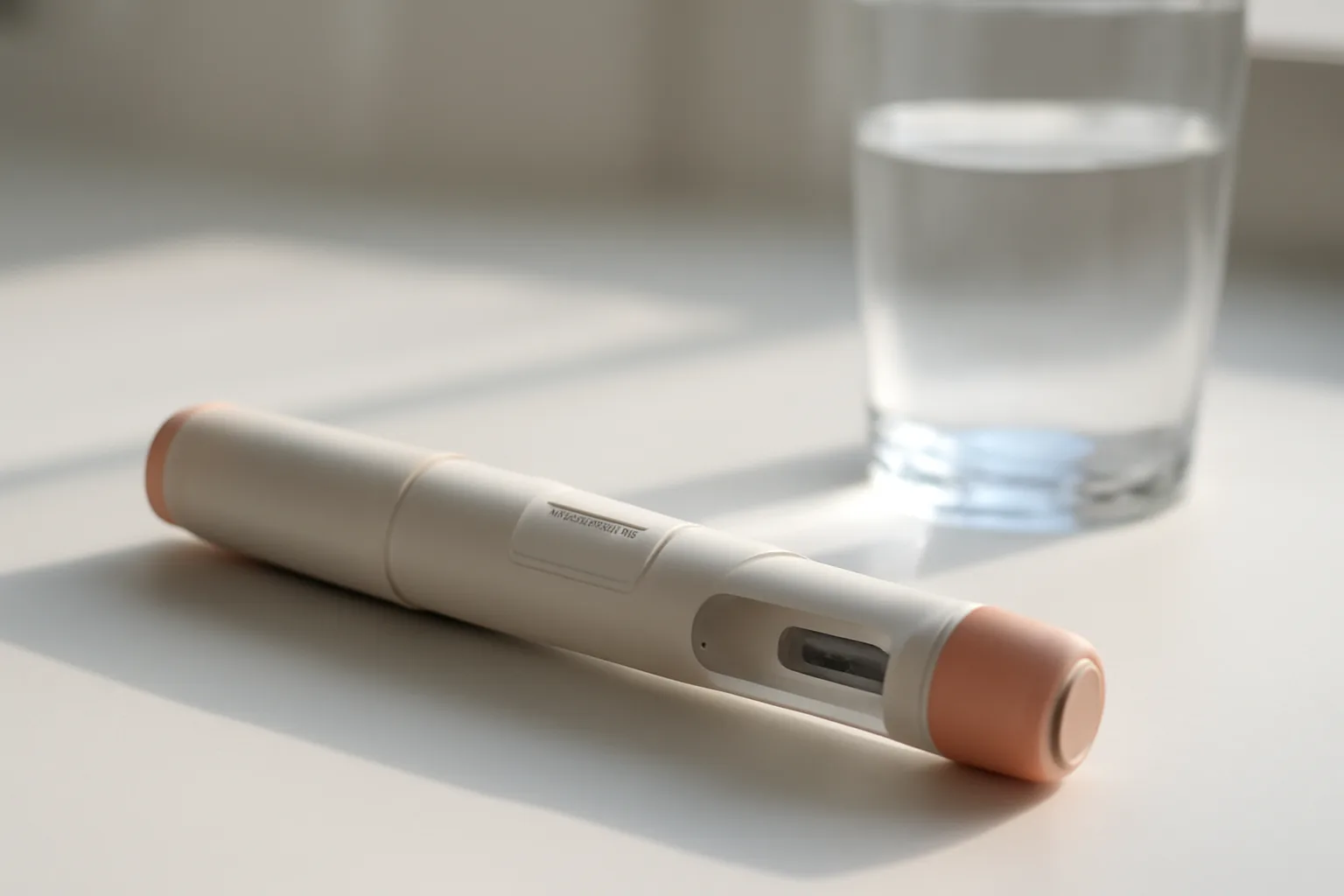
The approved dose of Vyleesi is 1.75 mg delivered by a single-use autoinjector, self-injected subcutaneously into the abdomen or thigh, taken as needed roughly 45 minutes before anticipated sexual activity [4, 8]. It is not a daily medication. Patients are instructed not to use it more than once within 24 hours and not more than 8 times per month, per the approved labeling reflected in the phase 3 trial protocol [2]. If a dose doesn't produce the desired effect, waiting for the next opportunity rather than redosing within the same day is the standard guidance. For a full walkthrough of the schedule, timing around meals and alcohol, and what to do if you miss the window, see PT-141 dosage. For the mechanics of the injection itself, including needle handling and rotating sites, see PT-141 how to inject and PT-141 injection sites.
What are the side effects of PT-141?
| Nausea | ~40% |
|---|---|
| Flushing | ~20% |
| Injection site reactions | ~13% |
| Headache | ~11% |
| Vomiting | ~5% |
Nausea is the most common side effect by a wide margin. A pooled safety analysis across the full bremelanotide clinical development program found nausea in roughly 40% of patients on the approved dose, with flushing, injection site reactions, and headache also reported at meaningfully higher rates than placebo [13]. Here's the approximate side effect picture from that safety pooling and the phase 3 trial data [5, 11]: | Side effect | Approximate rate on bremelanotide | Nausea tends to be worse with the first couple of doses and often lessens with repeated use, which is a pattern noted in trial reporting, though it doesn't disappear for everyone. Some patients stop treatment because of it. A less common but clinically important effect is a transient rise in blood pressure after dosing, which is why the drug carries specific cautions around use in people with uncontrolled hypertension or cardiovascular disease [10, 4]. A 2022 review in Medicina focused specifically on managing hypertension alongside female sexual dysfunction treatment, underscoring that blood pressure needs to be checked and controlled before starting bremelanotide [14]. Darkening of skin, particularly on the face, gums, and breasts, has also been reported with repeated dosing, related to bremelanotide's activity on melanocortin 1 receptors (the same receptor family involved in skin pigmentation), and this can be irreversible in some cases per FDA labeling information reflected in pharmacology reviews [8, 19].
Who should not use PT-141?
Bremelanotide is contraindicated in people with uncontrolled high blood pressure or known cardiovascular disease, because of the transient blood pressure spikes seen after dosing [4, 10]. It's approved for premenopausal women only; postmenopausal women were not part of the key trial population, and men were never studied in the approval program at all [2]. It should not be combined with other treatments that affect blood pressure without medical supervision, and anyone with a history of stroke, heart attack, or poorly managed hypertension needs a conversation with a prescriber before considering it, not a self-directed trial. Pregnancy and breastfeeding were not studied in the trial population either. A 2020 review in The Annals of Pharmacotherapy summarizing the drug's approval reiterates that patient selection, particularly cardiovascular screening, is part of appropriate prescribing, not an optional step [15].
Does PT-141 cause weight loss or affect appetite?
There's a real biological reason to ask this. Bremelanotide acts on MC4R, the same melanocortin receptor implicated in appetite regulation, and MC4R agonists are an active area of obesity drug research [7]. That doesn't mean bremelanotide is an approved or effective weight loss drug; it isn't. A 2022 analysis pooling two phase 1 randomized controlled trials looked specifically at body weight changes in obese women given bremelanotide, separate from the sexual desire trials . This is early mechanistic data, not evidence that Vyleesi at its approved dose and schedule produces meaningful weight loss in the general population. Nausea, a very common side effect, can itself suppress appetite temporarily, which is a confound worth keeping in mind rather than a therapeutic effect.
How does PT-141 compare to flibanserin (Addyi) and PDE5 inhibitors?
Flibanserin (Addyi) is the other FDA-approved HSDD drug, but it works completely differently from bremelanotide. Flibanserin is a daily pill affecting serotonin and dopamine signaling, taken every night regardless of sexual activity plans. Bremelanotide is taken on demand, only when needed, via injection.
| Feature | Bremelanotide (Vyleesi) | Flibanserin (Addyi) | Sildenafil-type (PDE5i) |
|---|---|---|---|
| Mechanism | Central, MC4R agonist | Central, serotonin/dopamine | Peripheral, blood flow |
| Dosing pattern | On demand | Daily | On demand |
| Route | Subcutaneous injection | Oral pill | Oral pill |
| FDA approved for | HSDD, premenopausal women | HSDD, premenopausal women | Not approved for female sexual dysfunction |
| Common side effect | Nausea, flushing | Dizziness, low blood pressure, sedation | Headache, flushing |
PDE5 inhibitors like sildenafil are not FDA approved for female sexual dysfunction and generally don't address desire at all, since they work on vascular smooth muscle rather than brain circuitry [7, 9]. A 2022 review in Current Psychiatry Reports on pharmacotherapy for sexual dysfunction in women places bremelanotide and flibanserin as the two approved options, with PDE5 inhibitors and other agents used off label or investigationally [16]. A 2021 piece in the Drug and Therapeutics Bulletin is notably skeptical of both approved drugs, arguing the regulatory bar for approving desire-focused medications in women has been set lower than ideal, given the modest effect sizes in both drugs' trials [10].
How long does PT-141 last, and how often can you take it?
Bremelanotide's effects are meant to align with the roughly 45-minute-before window before anticipated activity, and the approved schedule caps use at once per 24 hours, no more than 8 times monthly [4, 11]. It is not built for daily or back-to-back use. For specifics on elimination half-life, how long detectable levels persist, and how that interacts with the dosing cap, see PT-141 half life. For guidance on how long a supply lasts once dispensed and how to store unopened autoinjectors, see PT-141 storage and shelf life, and for how a typical usage pattern maps onto a monthly or quarterly cycle, see PT-141 cycle length.
Is there any research on PT-141 outside of sexual desire?
Yes, though this is early-stage and not clinically actionable yet. Because bremelanotide acts on melanocortin receptors broadly, more than the pathways tied to desire, researchers have explored other angles. A 2024 study in Anticancer Research reported that bremelanotide induced cell death and growth inhibition in glioblastoma cells in a laboratory setting, tied to suppression of a protein called survivin . A 2025 paper looked at melanocortin receptor gene polymorphisms and their association with inflammatory traits and disease [17]. None of this changes bremelanotide's approved use, and none of it supports off-label use for these other conditions. It's worth knowing the melanocortin receptor family is biologically active in more places than the brain's desire circuits. That's part of why side effects like skin pigmentation and blood pressure changes show up at all.
Where can you legitimately get PT-141 / Vyleesi?
Vyleesi requires a prescription. Because bremelanotide is not on the FDA's approved compounding bulk lists (503A or 503B) [23, 24], and because unregulated "research chemical" PT-141 sold online has no quality or dosing assurance behind it, the only sound path is a licensed prescriber evaluation followed by dispensing through a real pharmacy. Bremelanotide Rx works from a provider-reviewed model: an online consultation confirms whether bremelanotide is medically appropriate given your history and blood pressure, and prescriptions are filled through a licensed pharmacy partner, not compounded or manufactured in-house. That structure exists specifically because this drug has real cardiovascular contraindications that a one-way peptide sale online can't screen for.
Frequently asked questions
Is PT-141 peptide the same thing as Vyleesi?
Yes. PT-141 is the original research code name for bremelanotide, and Vyleesi is the FDA-approved brand name for that same molecule, approved for hypoactive sexual desire disorder in premenopausal women in 2019 [4]. Products labeled simply "PT-141" outside the Vyleesi pathway are not FDA-regulated formulations.
Does PT-141 peptide work for men?
It's not FDA approved for men. The RECONNECT phase 3 trials that led to approval enrolled only premenopausal women with HSDD [11]. Any use in men is off label, without dedicated large-scale trial safety or dosing data to draw on, so effects and risks in men are much less well characterized.
How is PT-141 different from Viagra or Cialis?
PT-141 works centrally, activating melanocortin 4 receptors in the brain tied to sexual desire [17]. Viagra and Cialis (PDE5 inhibitors) work peripherally, increasing blood flow to genital tissue. That's why PDE5 inhibitors help with physical arousal mechanics but don't reliably address low desire itself, and they aren't FDA approved for female sexual dysfunction [7, 9].
What is the PT-141 nasal spray, and can I still get it?
The nasal spray was the original delivery form tested in early 2000s trials, but it caused small blood pressure increases and was never approved [3]. The approved form today is a subcutaneous injection (Vyleesi). Any "PT-141 nasal spray" sold currently is not an FDA-approved product.
How much does PT-141 / Vyleesi cost?
Cost varies by insurance coverage, pharmacy, and whether it's dispensed as brand-name Vyleesi. Because pricing changes and isn't standardized in the studies reviewed here, check directly with your prescriber or pharmacy for current out-of-pocket cost rather than relying on a fixed number.
What are the most common PT-141 side effects?
Nausea is by far the most common, affecting roughly 40% of patients in the pooled clinical safety data, followed by flushing (around 20%), injection site reactions, and headache [5]. Nausea often eases with repeated doses but doesn't go away for everyone, and it's a common reason patients discontinue.
Can PT-141 raise blood pressure?
Yes, transient blood pressure increases have been documented after dosing, which is why bremelanotide is contraindicated in people with uncontrolled hypertension or cardiovascular disease [4, 10]. Blood pressure should be checked and controlled before starting treatment, and it's a key screening point any responsible prescriber will cover.
Does PT-141 actually increase sexual desire, or is the effect small?
It produced a statistically significant improvement over placebo in two phase 3 trials [11], but the absolute effect size is modest, and independent reanalyses have specifically questioned how clinically meaningful that difference really is for the average patient [20, 23]. It helps some people meaningfully; it isn't a guaranteed fix for everyone.
How often can you use PT-141?
The approved schedule allows use as needed, roughly 45 minutes before anticipated sexual activity, no more than once every 24 hours, and no more than 8 times per month [4, 11]. It isn't intended for daily use, and using it more frequently than recommended increases side effect risk without established added benefit.
Can PT-141 cause skin darkening?
Yes, repeated use has been associated with darkening of the skin, particularly on the face, gums, and breasts, linked to its activity on related melanocortin 1 receptors that regulate pigmentation. This effect can be irreversible in some cases, so any new or spreading pigment changes should be reported to a prescriber promptly [8, 19].
Is PT-141 the same as flibanserin (Addyi)?
No. Both treat HSDD in premenopausal women, but flibanserin is a daily oral pill affecting serotonin and dopamine, while bremelanotide (PT-141) is an on-demand injection acting on melanocortin receptors [9]. They work through different brain pathways and have different side effect profiles, dosing schedules, and delivery routes.
Does PT-141 cause weight loss?
It's not approved or established as a weight loss treatment. It acts on MC4R, a receptor also studied in obesity research, and early phase 1 data looked at body weight changes in obese women [26], but this doesn't mean Vyleesi at its approved dose produces reliable weight loss in general use.
Sources
- PubMed, Bremelanotide (PMID 34436837): Vyleesi is approved specifically for acquired, generalized HSDD in premenopausal women as an on-demand subcutaneous injection
- PubMed, Bremelanotide (PMID 31369224, 2006): Early nasal spray formulation of bremelanotide showed a blood pressure increase signal in development, redirecting the program
- PubMed, Bremelanotide: First Approval (PMID 31429064): Bremelanotide (Vyleesi) received FDA approval in 2019 as a subcutaneous autoinjector dosed on demand
- PubMed, Safety Profile of Bremelanotide Across the Clinical Development Program (PMID 35147466): Pooled safety data show nausea in roughly 40% of patients along with flushing, injection site reactions, and headache
- PubMed, Targeting the central melanocortin system for metabolic disorders (PMID 37365323): MC4R, the receptor bremelanotide activates, is also a target in central melanocortin research for metabolic and appetite regulation
- PubMed, Medical Treatment of Female Sexual Dysfunction (PMID 35428435): PDE5 inhibitors work peripherally on blood flow and are not FDA approved for female sexual dysfunction
- PubMed, Bremelanotide: New Drug Approved for Treating HSDD (PMID 31893927): Approved dosing, cardiovascular screening considerations, and skin pigmentation risk are part of appropriate prescribing
- PubMed, Pharmacotherapy for Sexual Dysfunction in Women (PMID 35102537): Bremelanotide and flibanserin are the two FDA-approved pharmacologic treatments for HSDD, with different mechanisms
- PubMed, Management of Hypertension with Female Sexual Dysfunction (PMID 35630054): Blood pressure must be checked and controlled before starting bremelanotide due to transient BP increases after dosing
- PubMed, Bremelanotide for HSDD: Two Randomized Phase 3 Trials (PMID 31599840): RECONNECT phase 3 trials enrolled premenopausal women with HSDD and tested on-demand dosing capped at 8 times monthly
- PubMed, Prespecified and Integrated Subgroup Analyses from RECONNECT (PMID 35230162): Subgroup analyses of RECONNECT trials found no dramatically different response pattern across age or baseline severity groups
- PubMed, Bremelanotide and flibanserin: the fallacy of regulatory precedent (PMID 34642243): Independent commentary questions whether the regulatory bar for approving both HSDD drugs was appropriately set given modest effect sizes
- PubMed, The neurobiology of bremelanotide for HSDD (PMID 33455598): Bremelanotide binds MC4R in brain regions tied to motivational and reward circuits involved in sexual desire
- PubMed, Polymorphism of Melanocortin Receptor Genes (PMID 41002740): Melanocortin 1 receptor activity, related to the pigmentation pathway, is tied to skin darkening effects reported with bremelanotide
- PubMed, Small Effects, Questionable Outcomes: Bremelanotide for HSDD (PMID 36809187): This 2024 analysis argues the treatment effect over placebo is small enough to question its clinical meaningfulness
- PubMed, Responder Analyses from a Phase 2b Dose-Ranging Study (PMID 31277966): Dose-ranging phase 2b data showed more women meeting response thresholds as dose increased, informing the approved dose
- PubMed, 2019 FDA TIDES Harvest (PMID 32151051): Bremelanotide is listed among FDA peptide and oligonucleotide drug approvals for 2019
- PubMed, Re-Analyzing Phase III Bremelanotide Trials for HSDD (PMID 33678061): A 2021 reanalysis raises concerns about how HSDD outcomes were defined and measured in the phase 3 trials
- eCFR, 21 CFR 216.24, the 503B Bulks List: Bremelanotide is not included on the FDA's 503B bulk drug substances list for outsourcing facility compounding
- Cornell Law, 21 U.S.C. 353a, pharmacy compounding: Federal law sets specific criteria pharmacies must meet to legally compound a drug substance for a patient prescription
- PubMed, Effect of bremelanotide on body weight of obese women (PMID 35170192): Two phase 1 randomized controlled trials examined body weight changes in obese women given bremelanotide
- PubMed, A biodegradable suction patch for transbuccal peptide delivery (PMID 40513668): Research into non-injectable peptide delivery routes, such as a transbuccal patch, is ongoing but early-stage
- PubMed, Melanocortin Receptor Agonist Bremelanotide Induces Cell Death in Glioblastoma Cells (PMID 39197897): A 2024 laboratory study found bremelanotide induced cell death and growth inhibition in glioblastoma cells via survivin suppression