Last updated 2026-07-24
TL;DR
Yes, in one specific form. The FDA approved bremelanotide as Vyleesi in June 2019 for hypoactive sexual desire disorder (HSDD) in premenopausal women [1]. Generic "PT-141" sold as a research chemical, nasal spray, or compounded injection is not the approved product and isn't FDA-reviewed for safety or dosing accuracy.
Is PT-141 FDA approved?
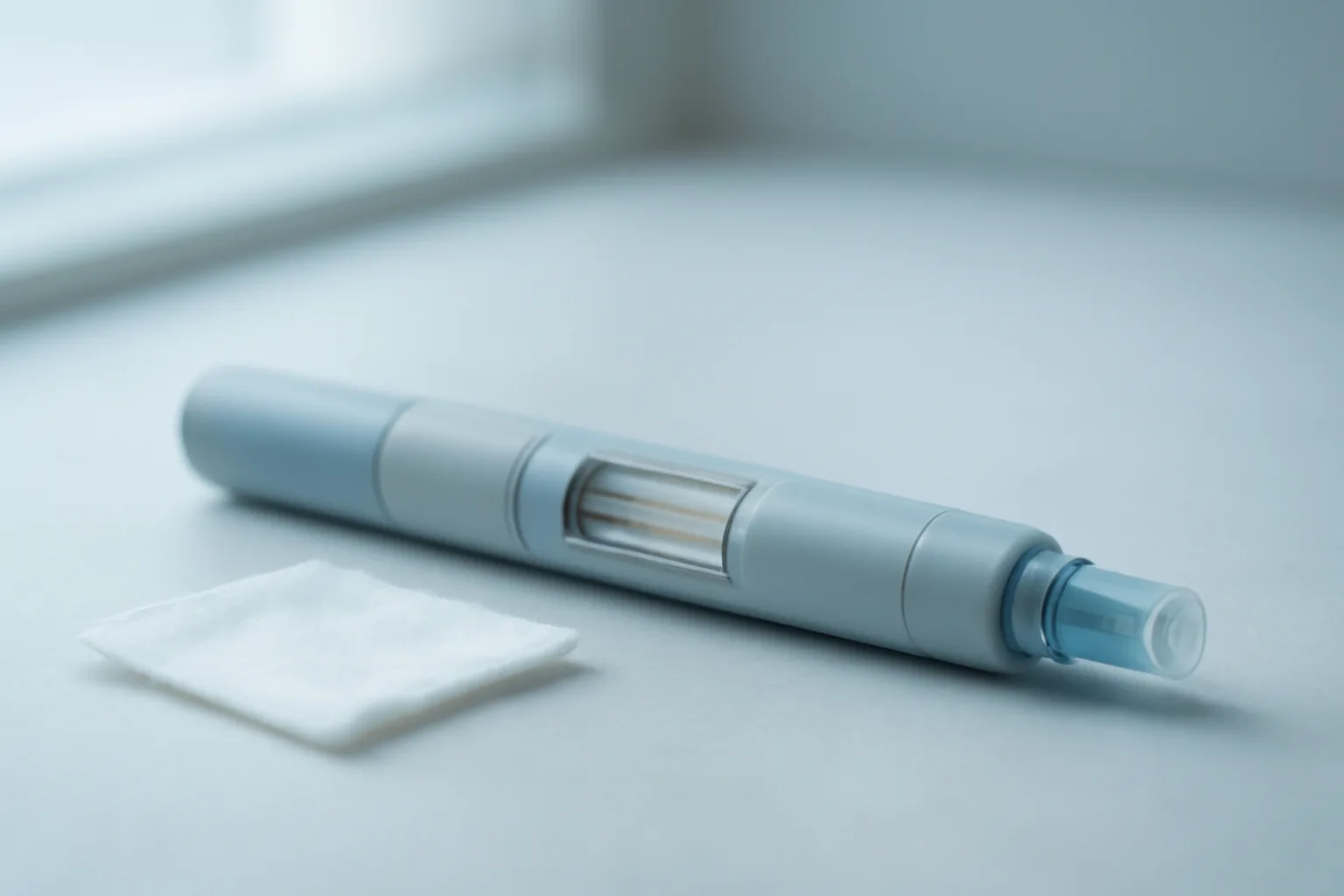
Partly, and the details matter. The FDA approved bremelanotide, the compound most people call PT-141, under the brand name Vyleesi in June 2019 [1]. The approval covers exactly one indication: hypoactive sexual desire disorder (HSDD) in premenopausal women, given as a subcutaneous injection using an autoinjector pen. That's the whole scope. It is not approved for men. It is not approved for postmenopausal women. It is not approved as a nasal spray, a sublingual troplet, or a vial you draw up yourself from powder. If you see "PT-141" sold that way, on a peptide site or through a compounding pharmacy claiming it's the same thing, you're looking at an unapproved product, even if the active molecule is identical. Drugs@FDA, the agency's official database of approved drug products, lists Vyleesi under application number 210557 [1]. That's the one and only FDA record for bremelanotide as a finished drug product. Anything else calling itself PT-141 sits outside that approval, legally and in terms of quality assurance.
What exactly did the FDA approve, and when?
The FDA approved Vyleesi (bremelanotide) on June 21, 2019, making it the second drug ever approved in the US specifically for low sexual desire in women, after flibanserin (Addyi) in 2015 [2]. A 2019 pharmacology review in Drugs describes it as a melanocortin receptor agonist approved for premenopausal women with acquired, generalized HSDD, meaning desire that used to be normal and dropped, not present since puberty, and not tied to one specific partner or situation [2]. The approval rested on two identical Phase 3 trials, called RECONNECT, that randomized over 1,200 premenopausal women with HSDD to bremelanotide or placebo for 24 weeks [3]. Women self-injected 1.75 mg subcutaneously as needed, at least 45 minutes before anticipated sexual activity, no more than once in 24 hours and no more than 8 times a month [3]. A 2020 review in The Annals of Pharmacotherapy walks through the same approval pathway and dosing structure, confirming the once-daily-max, eight-times-monthly ceiling as a condition of use, more than a suggestion [4].
How is PT-141's mechanism different from Viagra?
This is the single most useful thing to understand if you're comparing it to sildenafil (Viagra) or tadalafil (Cialis). Those drugs work on blood vessels. PT-141 works on the brain. Sildenafil and its relatives are PDE5 inhibitors. They relax smooth muscle and increase blood flow to the genitals, which is why they work for erectile dysfunction, a vascular problem. Bremelanotide does nothing to blood vessels directly. It's a melanocortin receptor agonist, meaning it activates MC4R receptors in the central nervous system, largely in the hypothalamus, a brain region that governs appetite and sexual motivation [5]. A 2022 mechanistic review in CNS Spectrums frames bremelanotide's action as centrally mediated, working through melanocortin pathways tied to motivation and arousal circuitry rather than local genital blood flow [6]. That's why it's dosed as "when desired" rather than timed tightly around an erection window, and why it doesn't require any physical arousal cue to start working. It's targeting want, not mechanics. The melanocortin system also touches appetite regulation, which is why researchers have separately studied bremelanotide's cousins and related MC4R agonists for weight and metabolic effects, an entirely different research thread from sexual desire [7]. One small Phase 1 dataset looked at bremelanotide's effect on body weight in obese women and found modest changes worth further study, not a weight-loss indication . That's not what it's approved for. Worth knowing the receptor is shared across systems, but the approved use is HSDD, full stop. If you want the deeper pharmacology, our PT-141 peptide page walks through the receptor biology in more depth.
How well does it actually work in trials?
Modestly. That's the honest word, and it's worth sitting with rather than glossing over. In the RECONNECT trials, women on bremelanotide saw a statistically significant increase in desire scores (measured by the FSFI-D) and a decrease in distress related to low desire (measured by FSDS-DAO), compared to placebo, over 24 weeks [3]. But a 2024 critique in the Journal of Sex Research, titled bluntly "Small Effects, Questionable Outcomes," argues the actual size of that improvement is small and that the clinical meaningfulness of the FSFI-D shift is debatable [8]. A separate 2021 re-analysis in the same journal raises similar concerns about how HSDD was operationalized and whether the trial's responder definitions inflate the perceived benefit [9]. And a 2021 piece in Drug and Therapeutics Bulletin goes further, calling the regulatory comparison to flibanserin's approval a "fallacy of regulatory precedent," arguing neither drug clears a high bar for effect size [5]. So where does that leave a reader? Some women get a real, noticeable lift in desire. Many get a small one. A meaningful minority get side effects without much benefit. A subgroup analysis from RECONNECT, published in 2022, did find fairly consistent responses across age bands and baseline desire severity, which at least suggests the modest effect isn't concentrated in one narrow population [10]. But nobody should walk in expecting a dramatic transformation. The data don't support that framing.
What are the most common side effects?
Nausea, by a wide margin. In the RECONNECT trials, nausea was reported by roughly 40% of women on bremelanotide, and it was the leading reason women stopped taking the drug [3]. It was usually worse with the first couple of doses and tended to ease with repeated use, according to the same trial data. Flushing was the second most common effect, plus injection site reactions (redness, swelling, sometimes small nodules under the skin from repeated subcutaneous dosing) and headache [4]. A 2022 pooled safety analysis across the full bremelanotide clinical development program (more than the two main trials) confirms nausea and flushing as the dominant tolerability issue, with most events described as mild to moderate and self-limited [11]. Bremelanotide also causes a transient rise in blood pressure and a modest drop in heart rate after each dose, an effect tied directly to its central mechanism rather than to cardiovascular disease. A 2022 review focused on hypertension and female sexual dysfunction flags this as a reason to use caution, and avoid the drug altogether, in women with uncontrolled high blood pressure or known cardiovascular disease . One rarer but distinctive effect: focal hyperpigmentation, meaning darkening of small patches of skin, most often on the face, gums, or breasts, in women who used it repeatedly over a longer period. This comes from melanocortin receptor activity on pigment-producing cells, and it doesn't reliably reverse when the drug is stopped. Trial data suggest it's uncommon but real, and it's part of the label's cautions [4]. For the full breakdown by frequency and severity, see PT-141 peptide side effects.
How is Vyleesi dosed?
One 1.75 mg dose, self-injected subcutaneously into the abdomen or thigh, at least 45 minutes before you expect to have sex [3]. It comes in a single-use autoinjector pen, prefilled, no reconstitution or measuring required. The ceiling matters: no more than one dose in 24 hours, and no more than eight doses in a month [3]. That's not an arbitrary suggestion, it's the tested and labeled regimen from the Phase 3 program. Going beyond it hasn't been studied and isn't recommended. A Phase 2b dose-ranging study that preceded the main trials tested a few different dose levels and helped settle on 1.75 mg as the one that balanced desire improvement against tolerability, particularly nausea rates, which rose sharply at higher doses [12]. That's part of why the approved dose is what it is, not the highest dose tested, but the one with the best benefit-to-side-effect ratio. For a full walkthrough of timing, injection sites, and what a missed or doubled dose means, see our PT-141 dosage chart and PT-141 peptide how to use guides. If you're trying to work out mg-per-mL math for a specific formulation, the PT-141 dosage calculator walks through that separately.
Is PT-141 approved for men?
No. Vyleesi's FDA approval covers only premenopausal women with HSDD [1]. There is no FDA-approved bremelanotide product for men, for erectile dysfunction or for any other use. Early bremelanotide research, going back to studies published in 2006 and 2012, actually included work in men with erectile dysfunction, since the compound's central mechanism seemed relevant to arousal regardless of sex [3, 24]. But that development path didn't lead to an approved male product. Palatin Technologies, the company that developed bremelanotide, ultimately partnered with AMAG Pharmaceuticals and pursued approval specifically for female HSDD, which is the product that reached market [2]. Men using bremelanotide today are using it entirely off-label or through unregulated peptide sources, with no FDA safety review behind the product they're injecting.
What's the difference between Vyleesi and generic "PT-141" sold online?
Vyleesi is a specific, FDA-reviewed drug product: a defined 1.75 mg dose, in a defined autoinjector, made under pharmaceutical manufacturing controls, with a label backed by Phase 3 trial data [1, 12]. "PT-141" sold online as a research peptide is something else entirely: usually a lyophilized powder or pre-mixed vial, sold without FDA review of its purity, sterility, concentration accuracy, or even confirmation that what's in the vial matches what's on the label. Bremelanotide is not on the FDA's list of bulk drug substances for 503A compounding, and it is not on the 503B bulks list either, the two lists that let compounding pharmacies legally prepare a drug from raw active ingredient for individual patients or hospitals under 21 U.S.C. 353a [13]. That means a pharmacy compounding bremelanotide from bulk powder, outside the approved Vyleesi supply chain, is operating in a gray zone the FDA hasn't formally sanctioned for that use, per the framework in 21 CFR 216.23 and 216.24 [10, 11]. Practically, this means quality control is the whole ballgame. A 2020 review of the FDA's 2019 peptide and oligonucleotide approvals (the "TIDES harvest") notes how much manufacturing rigor goes into an approved peptide drug like bremelanotide compared to research-grade material never meant for human dosing . If you're going to use bremelanotide at all, the version with an actual quality chain behind it is the one worth paying for. Bremelanotide Rx exists to point readers toward that provider-reviewed route, with a named pharmacy partner handling fulfillment, rather than toward unregulated vials with no chain of custody.
Who should not take bremelanotide?
Women with uncontrolled hypertension or known cardiovascular disease should avoid it, given its transient blood pressure effects after each dose . It's not approved for postmenopausal women, and safety data in that group is limited. It's also not for men, adolescents, or anyone whose low desire is better explained by a relationship problem, a medication side effect (many antidepressants suppress libido, for instance), or an untreated mood or hormonal condition. A 2021 review in the Journal of Midwifery & Women's Health lays out the diagnostic workup for HSDD, emphasizing that it's a diagnosis of exclusion: other causes (depression, thyroid disease, relationship distress, medication effects) need to be ruled out or addressed first [14]. Bremelanotide is not a fix for desire loss that has an identifiable non-biological cause. Women who are pregnant or trying to become pregnant also shouldn't use it; the trials excluded that population, and there's no safety data to lean on.
How does PT-141 compare to flibanserin (Addyi)?
They're the only two FDA-approved drugs for HSDD in the US, and they work completely differently.
| Bremelanotide (Vyleesi) | Flibanserin (Addyi) | |
|---|---|---|
| FDA approval | June 2019 [2] | August 2015 |
| Mechanism | Melanocortin receptor agonist, central [6] | Serotonin receptor modulator, daily dosing |
| Dosing | As-needed injection, 45 min before sex [3] | Daily pill, taken every night |
| Alcohol interaction | Not flagged as a major interaction | Contraindicated with alcohol |
| Main side effects | Nausea (~40%), flushing, injection site reactions [3] | Dizziness, sleepiness, low blood pressure |
| Population | Premenopausal women, HSDD [1] | Premenopausal women, HSDD |
A 2021 commentary calls out the shared thinness of the effect-size evidence for both drugs, arguing regulators leaned on precedent ("we already approved one HSDD drug, so the bar for the next one is similar") rather than each drug clearing an independently high threshold [5]. If you're choosing between them, the practical difference is lifestyle fit: bremelanotide is as-needed and doesn't interact with alcohol the way flibanserin does, but it comes with a much higher nausea rate and requires self-injection rather than swallowing a pill.
Are there newer or alternative delivery forms in development?
Yes, though nothing beyond Vyleesi's injection is FDA-approved yet. Researchers have explored other ways to deliver bremelanotide that would avoid the needle. A 2025 study in the Journal of Controlled Release describes a biodegradable suction patch designed for transbuccal (inside-the-cheek) peptide delivery, tested as a proof-of-concept for peptides like bremelanotide that currently require injection . That's early-stage engineering research, not a product anyone can buy or a pathway with an FDA filing attached. It matters for understanding where the field is headed, not for anything a reader can act on today. The only FDA-approved bremelanotide delivery method remains the subcutaneous autoinjector pen that comes with Vyleesi [1].
Does bremelanotide have any other researched uses?
A few threads exist in the literature, none of them approved uses. Because bremelanotide activates melanocortin receptors broadly, more than in circuits tied to sexual motivation, researchers have looked at other angles. A 2024 lab study found bremelanotide induced cell death and slowed growth in glioblastoma cells in vitro, tied to suppression of a protein called survivin . That's cell-culture research, many steps from any human application, and not something a reader should read into as a cancer treatment lead. Separately, the melanocortin system's role in appetite has prompted broader interest in MC4R agonists for metabolic disease, a 2023 review in Nature Reviews Endocrinology covers that landscape, though it's centered on other melanocortin drugs developed specifically for weight and metabolic indications, not bremelanotide itself [7]. None of this changes what Vyleesi is approved for. It's approved for one thing: HSDD in premenopausal women.
Frequently asked questions
Is PT-141 the same thing as Vyleesi?
The active ingredient is the same molecule, bremelanotide. Vyleesi is the specific FDA-approved brand name product: a 1.75 mg dose in a prefilled autoinjector, made under pharmaceutical manufacturing standards [1]. "PT-141" sold as a research chemical or compounded vial is not reviewed by the FDA for purity, dose accuracy, or sterility, even though it's chemically the same compound.
When was PT-141 (bremelanotide) FDA approved?
The FDA approved bremelanotide as Vyleesi on June 21, 2019, for hypoactive sexual desire disorder in premenopausal women [4]. It's listed in the Drugs@FDA database under application number 210557 [1]. It was the second drug ever approved in the US for this specific condition, after flibanserin in 2015.
Is PT-141 FDA approved for men?
No. The approval covers only premenopausal women with HSDD [1]. There's no FDA-approved bremelanotide product for men. Early research included studies in men with erectile dysfunction back in the mid-2000s, but the drug's approved development path went toward female HSDD, not a male indication [3].
How is PT-141 different from Viagra or Cialis?
Sildenafil (Viagra) and tadalafil (Cialis) work on blood vessels, increasing blood flow to genital tissue. Bremelanotide works on the brain, activating melanocortin receptors in the hypothalamus tied to sexual motivation [18]. It targets desire, not blood flow, which is why the two drug classes aren't interchangeable despite both being called "sexual health" drugs.
What are the most common side effects of PT-141?
Nausea is by far the most common, affecting roughly 40% of women in the main trials, along with flushing, headache, and injection site reactions [12]. Nausea was the top reason women discontinued treatment. It tends to be worse with early doses and ease over time, though not for everyone [5].
Can PT-141 cause skin darkening?
Yes, in some users with repeated use. Focal hyperpigmentation, meaning darkened patches on the face, gums, or breasts, has been reported, tied to melanocortin receptor activity on pigment cells. It's uncommon but doesn't reliably reverse after stopping the drug, and it's listed as a caution on the Vyleesi label [8].
How much does an approved dose of Vyleesi cost?
This article doesn't have a verified current price to cite; list prices for branded specialty drugs change often and vary by pharmacy and insurance coverage. Check current pricing directly through a licensed pharmacy or your insurer rather than relying on a fixed number here.
Does insurance cover PT-141 (Vyleesi)?
Coverage varies by plan and isn't something a general article can state reliably; some insurers require prior authorization or exclude HSDD treatments entirely. The honest answer is to call your specific insurer or ask the prescribing provider's office to check, since coverage rules shift by plan year.
How well does PT-141 actually work for low desire?
Modestly, according to the trial data itself. RECONNECT showed statistically significant improvement in desire scores over placebo, but multiple published critiques argue the effect size is small and its real-world meaningfulness is debatable [12, 20, 22]. Some women notice a real difference; many notice a small one; expectations should stay realistic.
Who shouldn't take bremelanotide?
Women with uncontrolled high blood pressure or cardiovascular disease should avoid it, since it causes a transient blood pressure rise after each dose [23]. It's also not approved for postmenopausal women, men, or anyone whose low desire stems from an untreated cause like depression or medication side effects, which should be addressed first [2].
Is compounded PT-141 legal?
It's a gray area. Bremelanotide isn't on the FDA's 503A or 503B bulk drug substance lists that authorize compounding from raw powder [10, 11]. Pharmacies compounding it that way sit outside the FDA's sanctioned framework under 21 U.S.C. 353a, meaning there's no official green light for that practice [9].
How often can you use PT-141?
The approved regimen for Vyleesi is one 1.75 mg subcutaneous dose per episode, taken at least 45 minutes before anticipated sexual activity, with a hard ceiling of one dose per 24 hours and no more than eight doses per month [12]. Going beyond that hasn't been studied in the approval trials.
Sources
- Drugs@FDA, FDA-approved drug products database: Vyleesi (bremelanotide) is the FDA-approved product, listed in the official approved drug database.
- Journal of Midwifery & Women's Health, 2021 (PMID 34510696): HSDD diagnosis requires ruling out other causes like depression, thyroid disease, and relationship distress before treatment.
- PubMed, 2006 (PMID 31369224): Early bremelanotide research included studies in men with erectile dysfunction.
- Drugs: Bremelanotide: First Approval, 2019 (PMID 31429064): Bremelanotide was approved as Vyleesi in June 2019 for premenopausal women with acquired, generalized HSDD.
- Journal of Women's Health, Safety Profile of Bremelanotide, 2022 (PMID 35147466): Pooled safety data across the clinical program confirm nausea and flushing as the dominant tolerability issues, mostly mild to moderate.
- Nature Reviews Endocrinology, 2023 (PMID 37365323): The central melanocortin system is a broader research target for metabolic disorders beyond sexual desire.
- The Annals of Pharmacotherapy, 2020 (PMID 31893927): Vyleesi's dosing structure includes a once-per-24-hours maximum and other approval conditions, plus hyperpigmentation as a labeled caution.
- 21 U.S.C. 353a, pharmacy compounding: Federal law governs the conditions under which pharmacies may legally compound drugs from bulk substances.
- 21 CFR 216.23, the final 503A Bulks List: The 503A bulk drug substances list defines which raw ingredients pharmacies may legally use for compounding.
- 21 CFR 216.24, the 503B Bulks List: The 503B bulk drug substances list is the separate list governing outsourcing facility compounding.
- Obstetrics and Gynecology, RECONNECT Phase 3 Trials, 2019 (PMID 31599840): The two Phase 3 trials tested 1.75 mg subcutaneous bremelanotide as-needed, with nausea affecting roughly 40% of participants and driving discontinuation.
- Journal of Women's Health, RECONNECT Subgroup Analyses, 2022 (PMID 35230162): Subgroup analyses across age and baseline severity showed fairly consistent treatment response patterns.
- Drug and Therapeutics Bulletin, 2021 (PMID 34642243): A regulatory critique argues both bremelanotide and flibanserin approvals leaned on precedent rather than independently strong effect-size evidence.
- CNS Spectrums, neurobiology of bremelanotide, 2022 (PMID 33455598): Bremelanotide's mechanism is centrally mediated through melanocortin receptor activity, distinct from vascular drugs like sildenafil.
- Journal of Sex Research, Small Effects Questionable Outcomes, 2024 (PMID 36809187): A critical analysis argues the clinical trial effect sizes for bremelanotide are small and their clinical meaningfulness is questionable.
- The Journal of Sexual Medicine, Phase 2b Dose-Ranging Study, 2019 (PMID 31277966): Phase 2b dose-ranging data helped establish 1.75 mg as the dose balancing desire improvement against rising nausea rates at higher doses.
- Journal of Sex Research, Re-Analyzing Phase III Trials, 2021 (PMID 33678061): A re-analysis of the Phase 3 trials raises concerns about HSDD outcome measures and responder definitions.
- Medicina (Kaunas), Hypertension and Female Sexual Dysfunction, 2022 (PMID 35630054): Bremelanotide causes a transient rise in blood pressure after dosing, warranting caution in women with uncontrolled hypertension or cardiovascular disease.
- Diabetes, Obesity & Metabolism, bremelanotide and body weight, 2022 (PMID 35170192): Phase 1 trial data examined bremelanotide's effect on body weight in obese women as a separate research question from its approved use.
- Pharmaceuticals, 2019 FDA TIDES Harvest, 2020 (PMID 32151051): A review of 2019 FDA peptide drug approvals contextualizes the manufacturing rigor behind approved peptide products like bremelanotide.
- Journal of Controlled Release, biodegradable suction patch, 2025 (PMID 40513668): Early-stage research is testing a transbuccal suction patch as an alternative, non-injection peptide delivery method.
- Anticancer Research, bremelanotide in glioblastoma cells, 2024 (PMID 39197897): A lab study found bremelanotide induced cell death and growth inhibition in glioblastoma cells via survivin suppression, an early-stage unrelated research finding.