Last updated 2026-07-24
TL;DR
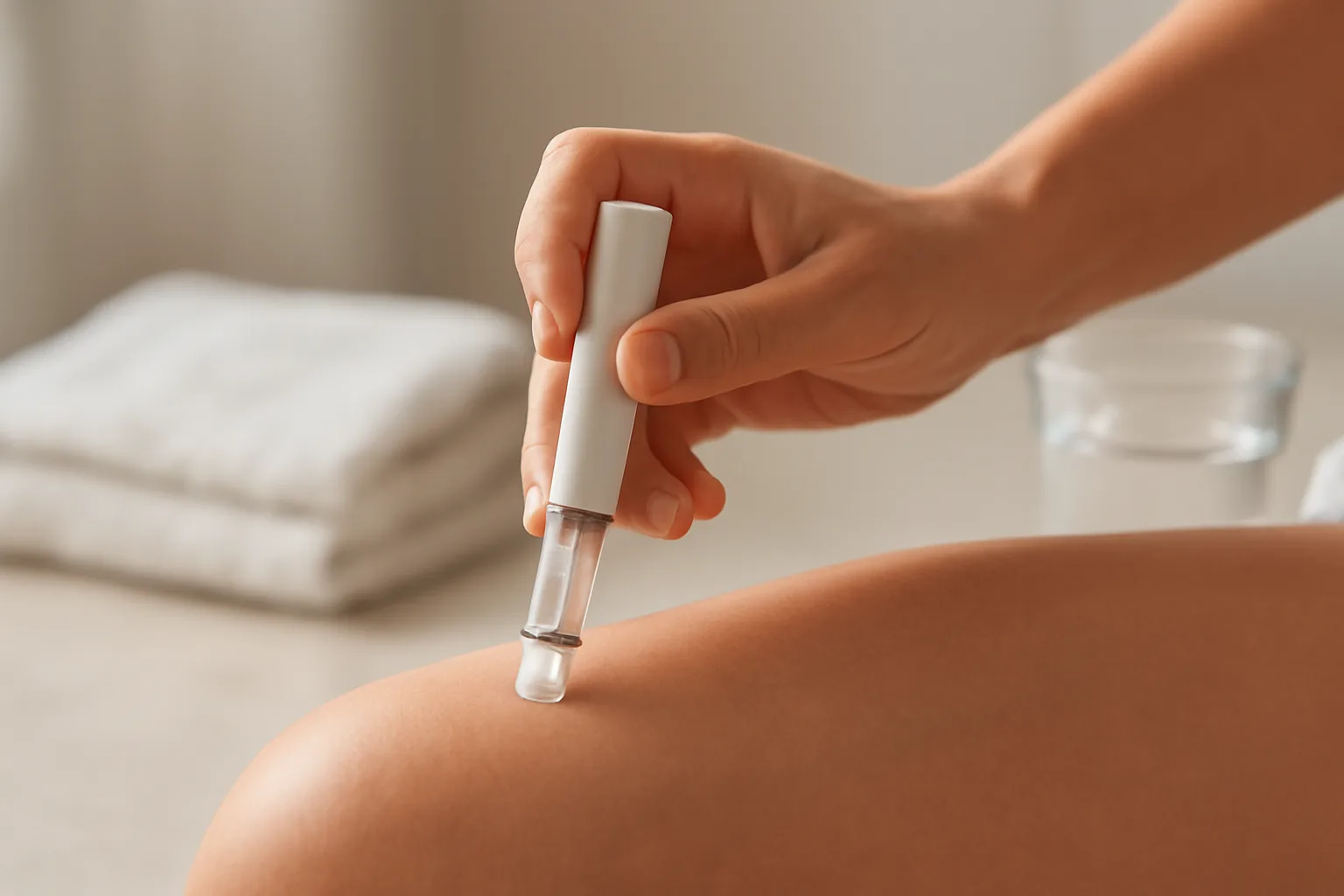
pt-141 (bremelanotide) is given as a subcutaneous injection in the abdomen or thigh, roughly 45 minutes before sexual activity, as needed rather than daily. the fda-approved version, vyleesi, is dosed at 1.75 mg per prefilled autoinjector, limited to one dose per 24 hours and no more than 8 doses per month [1]. nausea and flushing are the most common effects [2].
how is pt-141 actually administered?
PT-141 (bremelanotide) is given as a subcutaneous injection, meaning it goes into the fatty tissue just under the skin, not into a muscle or vein. The FDA-approved product, Vyleesi, comes as a single-use prefilled autoinjector delivering 1.75 mg, meant to be injected into the abdomen or the thigh [1]. You don't take this on a schedule the way you'd take a daily pill. It's dosed as needed, ahead of anticipated sexual activity, which puts it in a different category than something like a daily SSRI or a maintenance blood pressure drug. That as-needed structure is part of what makes it appealing to some patients and confusing to others who expect a fixed routine. The injection itself is quick. Autoinjector pens are built so you don't have to draw up a dose or handle a visible needle for long. Rotate the injection site between the abdomen and thigh, and avoid injecting into a spot that's bruised, tender, or scarred from a previous injection. For a full walkthrough of site rotation, storage, and technique, see our guide on pt-141 peptide how to use.
when should you inject pt-141 before sex?
The labeling for Vyleesi calls for injection at least 45 minutes before anticipated sexual activity [1]. That lead time exists because bremelanotide has to reach the central nervous system and act on melanocortin receptors before you'd notice any subjective effect, and that isn't instant. Some patients report effects lasting several hours after that 45-minute window, others notice less. The phase 3 trials that supported approval (the RECONNECT studies) didn't require a rigid within-hours cutoff for sexual activity after dosing, but 45 minutes is the practical minimum built into the prescribing information [1] [2]. Don't take it right before you expect to drive or need full alertness for something else. Nausea and, less often, transient blood pressure changes can show up in that same window, and you want to be sitting somewhere comfortable, not behind the wheel.
how often can you use pt-141?
Vyleesi's label caps use at one dose in any 24-hour period, and no more than 8 doses per month [1]. That monthly ceiling isn't arbitrary marketing caution. It reflects the dosing structure tested in the trials and the drug's known blood pressure effects, which are more of a concern with frequent dosing [3]. If you find yourself needing it most days of the month, that's worth a conversation with the prescriber rather than just pushing past the limit. Overuse doesn't make it work better; melanocortin receptor engagement doesn't scale that way, and you're mainly raising your exposure to side effects without added benefit. For a breakdown of dose timing across a full month and what "as needed" looks like in practice, see our pt-141 dosage chart.
why is pt-141 injected instead of taken as a pill?
Bremelanotide is a peptide, a short chain of amino acids, and peptides generally get broken down by digestive enzymes before they'd ever reach the bloodstream in useful amounts if swallowed. That's a basic pharmacology problem, not a design choice by the manufacturer. Subcutaneous injection routes around the gut entirely. It's the same reason insulin is injected rather than swallowed. Researchers are actively working on alternative delivery, including a 2025 study describing a biodegradable suction patch designed for transbuccal (across the cheek lining) peptide delivery, aimed at getting drugs like this into the body without needles . That's early-stage engineering work, not something available to patients now, but it signals where delivery science might head.
does pt-141 work like sildenafil (viagra)? what's the actual mechanism?
No, and this is the single most important thing to understand before you take it. Sildenafil (Viagra) works on blood vessels; it increases blood flow to genital tissue by affecting a vascular enzyme pathway. Bremelanotide works on the brain. Bremelanotide is a melanocortin receptor agonist, meaning it activates MC3R and MC4R receptors that sit in the central nervous system, particularly in brain regions tied to sexual motivation [3] [4]. It doesn't dilate blood vessels the way sildenafil does. It's trying to change desire and arousal signaling at the level of the brain, not the plumbing. This distinction explains a lot. It's why bremelanotide is approved for hypoactive sexual desire disorder (low desire) in women, a condition that's about motivation and interest, not primarily about blood flow mechanics. It's also why bremelanotide's side effect profile looks different from a PDE5 inhibitor's: nausea and flushing come from central nervous system and melanocortin pathway activity, not from vasodilation alone [5] [6]. The melanocortin system is also tied into appetite and metabolic regulation, which is a big reason pharmaceutical researchers have been interested in it well beyond sexual medicine; a 2023 review in Nature Reviews Endocrinology covers central melanocortin targets for metabolic disorders broadly [7], and separate phase 1 data looked specifically at bremelanotide's effect on body weight in obese women .
what is pt-141 actually approved to treat?
Bremelanotide is FDA-approved under the brand name Vyleesi for acquired, generalized hypoactive sexual desire disorder (HSDD) in premenopausal women, approved in 2019 [8]. "Acquired" means the low desire developed after a period of normal desire; "generalized" means it's not limited to one partner or situation. It is not approved for men, and it is not approved for postmenopausal women or for situational low desire tied to a specific relationship problem, stress period, or medication side effect. The approval sits on two randomized, placebo-controlled phase 3 trials (often referred to as the RECONNECT studies) published in Obstetrics and Gynecology in 2019 [2]. A 2019 review in Drugs summarized bremelanotide as the first melanocortin receptor agonist approved for this indication, calling it a first-in-class approval [8]. That's a meaningful regulatory milestone, though it's worth separating "first approved of its kind" from "dramatically more effective than alternatives," which the evidence doesn't clearly support (more on that below).
how effective is pt-141 in the actual trials?
The two phase 3 RECONNECT trials measured change in two co-primary endpoints: the Female Sexual Function Index desire domain score, and the number of distressing low-desire events reported. Bremelanotide showed statistically significant improvement over placebo on both measures [2]. But "statistically significant" and "large" are different things, and this is where independent reanalysis has pushed back hard. A 2021 reanalysis published in the Journal of Sex Research argued that the actual difference between drug and placebo on desire scores was small in absolute terms, and questioned whether the effect size meets a threshold most patients would consider clinically meaningful . A related 2024 paper in the same journal, titled "Small Effects, Questionable Outcomes," made a similar argument about the overall clinical significance of the data [9]. A 2021 piece in Drug and Therapeutics Bulletin went further, calling into question the regulatory precedent used to approve both bremelanotide and flibanserin (Addyi), arguing the approvals leaned on modest trial data [10]. This doesn't mean the drug doesn't work for some individuals. Responder analyses from a phase 2b dose-ranging study found a meaningful subset of women did report a clear response at certain doses [11]. It means you should walk in with realistic expectations: this is a modest-effect medication for a subset of patients, not a dramatic on-off switch, and the FDA's own product labeling should be read alongside the independent critiques, not instead of them.
what side effects should you expect?
Nausea is the most common side effect of bremelanotide, and it isn't rare. A pooled safety analysis across the clinical development program reported nausea in a substantial share of users, particularly with the first couple of doses, with rates that tend to drop off with continued use [5]. Flushing (a warm, reddened feeling in the face and chest) is the second most common complaint. Headache and injection site reactions (redness, itching, or a small bump where you inject) round out the frequently reported list [5] [12]. A less common but clinically important effect: bremelanotide can cause a transient rise in blood pressure and a drop in heart rate shortly after dosing. This is why it isn't recommended for patients with uncontrolled hypertension or known cardiovascular disease, and why the monthly dose ceiling matters [3] . If you have a history of high blood pressure, this deserves a direct conversation with whoever is prescribing it, not a self-managed workaround. Some women also notice temporary darkening of small patches of skin, gums, or freckles with repeated use, tied to melanocortin receptor activity on melanocyte-stimulating pathways; this is usually reversible after stopping but should be reported if it happens. For the complete list and what's rare versus common, read our page on pt 141 peptide side effects.
can you eat or drink before taking pt-141? does food matter?
Nausea is dose-related and tends to be worse on an empty stomach for many users, though the official labeling doesn't set a strict food requirement the way some oral medications do. Because bremelanotide is injected, not swallowed, food doesn't affect its absorption the way it would with an oral drug; the nausea comes from central nervous system melanocortin activity, not gut irritation [5] [6]. A light snack beforehand and staying upright for a bit after injecting are reasonable, practical steps many patients find help with the nausea, though this is common-sense self-management rather than something backed by a specific dosing study. Anti-nausea medication isn't part of standard co-prescribing, but if nausea is severe or persistent, that's a reason to talk to the prescriber about adjusting frequency, not to just push through it.
how do you decide the right dose?
The approved Vyleesi dose is fixed: 1.75 mg per autoinjector, one dose per use, no titration schedule [1]. That's different from a lot of compounded or research-use bremelanotide products, where doses and concentrations vary and there's no FDA-reviewed labeling to anchor to. If you're using an FDA-approved autoinjector, there's no dose math to do. If you're working with a compounded formulation, dosing needs to come from a prescriber who has reviewed your health history, not from a generic chart. For readers trying to understand dose ranges and how they map to body weight or response, our pt-141 dosage calculator and pt-141 dosage chart walk through the numbers used in published trials [2] [11].
is pt-141 the same thing sold online as a research peptide?
Not necessarily, and this distinction matters for safety. Vyleesi is an FDA-approved, prescription-only product manufactured under pharmaceutical quality controls, dispensed with an FDA-reviewed label specifying dose, frequency, and monthly limits [1]. Bremelanotide sold as a "research peptide" through online marketplaces is a different regulatory situation entirely. Bulk bremelanotide is not on the FDA's current 503A bulk drug substances list used for compounding, and its status has been the subject of regulatory nomination and review rather than settled inclusion [13] [14]. Buying vials labeled "not for human consumption" and self-dosing means you have no verified purity, no verified concentration, and no clinical oversight on cardiovascular risk factors that bremelanotide is known to affect [3]. If you're comparing where products come from and what oversight exists, our article on pt-141 peptide for sale amazon covers what to look for and what to avoid. For anyone actually ready to start treatment, the more defensible path is a provider-reviewed prescription route rather than an unregulated vial, and Bremelanotide Rx exists specifically to help readers find that route through pharmacy partners that fulfill legitimate prescriptions rather than compounding or selling product directly.
how does pt-141 compare to other options for low desire?
Two FDA-approved drugs currently exist for HSDD-type conditions in women: bremelanotide (Vyleesi, injectable, as-needed) and flibanserin (Addyi, oral, daily). They work through different mechanisms and different dosing patterns.
| Feature | Bremelanotide (Vyleesi) | Flibanserin (Addyi) |
|---|---|---|
| Route | Subcutaneous injection | Oral tablet |
| Dosing pattern | As needed, ~45 min before activity | Daily, at bedtime |
| Mechanism | Central melanocortin receptor agonist | Serotonin receptor modulator |
| Approved population | Premenopausal women, acquired generalized HSDD | Premenopausal women, acquired generalized HSDD |
| Alcohol interaction | Not a labeled contraindication | Contraindicated with alcohol |
| Common side effects | Nausea, flushing, headache, injection site reaction | Dizziness, somnolence, nausea |
A 2022 review in Current Psychiatry Reports and a 2022 review in Current Opinion in Obstetrics & Gynecology both cover these two drugs as the primary FDA-approved pharmacologic options for female sexual dysfunction, alongside off-label approaches like testosterone therapy and local estrogen for other subtypes of dysfunction [15] [16]. Neither drug is dramatically more effective than the other in head-to-head terms; the practical choice usually comes down to whether a patient prefers an as-needed injection or a daily pill, and whether the alcohol restriction on flibanserin is a dealbreaker.
what does the research pipeline beyond hsdd look like?
Bremelanotide's central mechanism has attracted research interest well outside sexual medicine. Melanocortin receptors sit at the intersection of appetite regulation, inflammation, and pigmentation pathways, which is why a 2025 paper in Diseases examined melanocortin receptor gene polymorphisms in relation to inflammatory conditions [17], and why a 2024 study in Anticancer Research investigated bremelanotide's effect on glioblastoma cell survival pathways in a lab setting . None of that translates into new approved uses today. It's basic and early-stage science exploring what else this receptor family does in the body, and it's a reason bremelanotide keeps showing up in pharmacology literature well past its 2019 approval [8]. A 2020 review of the "TIDES" (peptide and oligonucleotide) drugs approved that year placed bremelanotide alongside other peptide therapeutics as part of a broader wave of peptide drug approvals .
Frequently asked questions
How long before sex do you inject PT-141?
The FDA label for Vyleesi (bremelanotide) specifies injecting at least 45 minutes before anticipated sexual activity [1]. Effects build over that window rather than appearing instantly, because the drug has to act on melanocortin receptors in the central nervous system, not on local blood flow.
Where on the body do you inject PT-141?
Vyleesi is injected subcutaneously into the abdomen or the thigh using a prefilled autoinjector [1]. Rotate sites between doses and avoid areas that are bruised, scarred, or still tender from a previous injection.
How many times a month can you use PT-141?
The approved label limits use to one dose per 24 hours and no more than 8 doses per month [1]. This cap reflects both the trial dosing structure and known transient blood pressure effects associated with the drug [7].
Can PT-141 be taken as a pill instead of an injection?
No approved oral form exists. Bremelanotide is a peptide that digestive enzymes would break down before absorption, so it's given subcutaneously [1]. Researchers have explored alternative routes, including a 2025 study on a transbuccal suction patch for peptide delivery, but that's experimental, not an available product [26].
Does PT-141 work the same way as Viagra?
No. Sildenafil (Viagra) increases genital blood flow through a vascular mechanism. Bremelanotide activates melanocortin receptors (MC3R/MC4R) in the brain to affect sexual desire and arousal signaling centrally [7] [19]. They target completely different systems and aren't interchangeable.
What are the most common side effects of PT-141?
Nausea is the most frequently reported side effect, followed by flushing, headache, and injection site reactions [2] [8]. Nausea tends to be strongest with early doses and often lessens with continued use, based on pooled safety data from the clinical development program [2].
Is PT-141 safe for people with high blood pressure?
Bremelanotide can cause a transient rise in blood pressure and drop in heart rate after dosing, so it isn't recommended for people with uncontrolled hypertension or known cardiovascular disease [7] [24]. Anyone with a blood pressure history should discuss this directly with a prescriber before starting.
Who is PT-141 (Vyleesi) actually approved for?
Vyleesi is FDA-approved for acquired, generalized hypoactive sexual desire disorder in premenopausal women, approved in 2019 [4]. It is not approved for men, postmenopausal women, or desire problems tied to a specific relationship or situational cause rather than a generalized pattern.
How well does PT-141 actually work in clinical trials?
The RECONNECT phase 3 trials found statistically significant improvement in desire scores and reduction in distressing low-desire events versus placebo [11]. Independent reanalyses in the Journal of Sex Research have argued the absolute effect size is small and questioned its clinical meaningfulness, so expectations should stay realistic [21] [23].
Can you drink alcohol while using PT-141?
Alcohol isn't a labeled contraindication for bremelanotide the way it is for flibanserin (Addyi), which carries a specific alcohol warning. That said, general caution around alcohol and any new medication with blood pressure effects is reasonable; discuss it with your prescriber if you drink regularly [7].
Does PT-141 cause skin darkening?
Some users report temporary darkening of small skin patches, freckles, or gums with repeated use, related to melanocortin receptor activity on pigment-producing pathways. This effect is generally reversible after stopping the drug and should be reported to a prescriber if noticed [2].
Is bremelanotide bought online the same as prescription Vyleesi?
Not necessarily. Vyleesi is manufactured under FDA-approved quality controls with a reviewed label specifying exact dose and frequency [1]. Bremelanotide sold as a research chemical online has no such oversight, and its bulk substance status has gone through FDA nomination review rather than settled compounding approval [9] [10].
What's the difference between PT-141 and flibanserin (Addyi)?
PT-141 (bremelanotide/Vyleesi) is an as-needed subcutaneous injection taken about 45 minutes before activity. Flibanserin (Addyi) is a daily oral tablet taken at bedtime with a strict alcohol restriction. Both target premenopausal women with acquired generalized HSDD through different mechanisms [1] [12].
Sources
- Bremelanotide: First Approval, Drugs (2019), PMID 31429064: Vyleesi dosing: 1.75 mg subcutaneous autoinjector, at least 45 minutes before activity, one dose per 24 hours, max 8 doses per month, approved 2019 for HSDD
- Safety Profile of Bremelanotide Across the Clinical Development Program, Journal of Women's Health (2022), PMID 35147466: nausea is the most common adverse effect, followed by flushing, headache, and injection site reactions, with rates dropping over continued use
- Bremelanotide: New Drug Approved for Treating Hypoactive Sexual Desire Disorder, The Annals of Pharmacotherapy (2020), PMID 31893927: bremelanotide/Vyleesi is the first melanocortin receptor agonist approved for HSDD, approved in 2019
- Targeting the central melanocortin system for the treatment of metabolic disorders, Nature Reviews Endocrinology (2023), PMID 37365323: central melanocortin receptor system is a target across metabolic disorders, beyond sexual medicine
- The neurobiology of bremelanotide for the treatment of hypoactive sexual desire disorder in premenopausal women, CNS Spectrums (2022), PMID 33455598: bremelanotide is a central melanocortin receptor agonist acting on MC3R/MC4R in CNS pathways tied to sexual motivation, and is linked to transient blood pressure/heart rate effects
- Bremelanotide (Vyleesi) for hypoactive sexual desire disorder, The Medical Letter on Drugs and Therapeutics (2019), PMID 31381550: independent drug bulletin review of Vyleesi's approved indication and adverse effect profile
- FDA, Bulk Drug Substances Used in Compounding Under Section 503A: FDA's 503A bulk drug substance list governs which substances may be used in compounding, relevant to bremelanotide's compounding status
- FDA, Bulk Drug Substances Nominated for Use in Compounding (current list): bremelanotide's bulk substance status has gone through FDA nomination and review, not settled inclusion on the approved compounding list
- Bremelanotide for the Treatment of Hypoactive Sexual Desire Disorder: Two Randomized Phase 3 Trials, Obstetrics and Gynecology (2019), PMID 31599840: RECONNECT phase 3 trials showed statistically significant improvement over placebo on FSFI desire score and distressing event count
- Pharmacotherapy for Sexual Dysfunction in Women, Current Psychiatry Reports (2022), PMID 35102537: bremelanotide and flibanserin are the two primary FDA-approved pharmacologic options for HSDD in women
- Pharmacologic therapeutic options for sexual dysfunction, Current Opinion in Obstetrics & Gynecology (2022), PMID 36036468: review of pharmacologic options for female sexual dysfunction including off-label testosterone and local estrogen alongside approved drugs
- Bremelanotide and flibanserin for low sexual desire in women: the fallacy of regulatory precedent, Drug and Therapeutics Bulletin (2021), PMID 34642243: critique arguing the regulatory approval precedent for bremelanotide and flibanserin relied on modest trial data
- Bremelanotide, PMID 31369224 (2006): early bremelanotide research characterizing central nervous system-driven side effects distinct from vascular drug mechanisms
- Ligands for Melanocortin Receptors: Beyond Melanocyte-Stimulating Hormones and Adrenocorticotropin, Biomolecules (2022), PMID 36291616: melanocortin receptor ligand biology underlying bremelanotide's central receptor activity
- Polymorphism of Melanocortin Receptor Genes-Association with Inflammatory Traits and Diseases, Diseases (2025), PMID 41002740: melanocortin receptor gene variants are studied in relation to inflammatory traits and disease, beyond sexual medicine
- Small Effects, Questionable Outcomes: Bremelanotide for Hypoactive Sexual Desire Disorder, Journal of Sex Research (2024), PMID 36809187: reanalysis arguing bremelanotide's trial effect sizes are small and clinical significance is questionable
- Responder Analyses from a Phase 2b Dose-Ranging Study of Bremelanotide, The Journal of Sexual Medicine (2019), PMID 31277966: phase 2b dose-ranging responder analysis identifying a subset of women with a clear response at specific doses
- Re-Analyzing Phase III Bremelanotide Trials for Hypoactive Sexual Desire Disorder in Women, Journal of Sex Research (2021), PMID 33678061: independent reanalysis questioning whether the phase 3 trial effect size meets a clinically meaningful threshold
- 2019 FDA TIDES (Peptides and Oligonucleotides) Harvest, Pharmaceuticals (2020), PMID 32151051: bremelanotide was part of the 2019 wave of FDA-approved peptide and oligonucleotide therapeutics
- Effect of bremelanotide on body weight of obese women: Data from two phase 1 randomized controlled trials, Diabetes, Obesity & Metabolism (2022), PMID 35170192: phase 1 data examined bremelanotide's effect on body weight in obese women, reflecting melanocortin system's role in appetite regulation
- A biodegradable suction patch for sustainable transbuccal peptide delivery, Journal of Controlled Release (2025), PMID 40513668: experimental transbuccal suction patch technology being researched as an alternative peptide delivery method
- Melanocortin Receptor Agonist Bremelanotide Induces Cell Death and Growth Inhibition in Glioblastoma Cells via Suppression of Survivin Expression, Anticancer Research (2024), PMID 39197897: laboratory study found bremelanotide induced cell death and growth inhibition in glioblastoma cells via survivin suppression