Last updated 2026-07-24
TL;DR
PT-141 and Vyleesi are identical molecules: both are bremelanotide, a melanocortin receptor agonist approved by the FDA for hypoactive sexual desire disorder in premenopausal women. Vyleesi is the brand-name product, sold as a pre-filled autoinjector with batch testing and FDA manufacturing oversight. PT-141 refers to compounded bremelanotide, typically mixed by a pharmacy from bulk powder. Same drug, different regulatory path, different cost, and sometimes different concentration or volume.
What are PT-141 and Vyleesi, and are they the same drug?
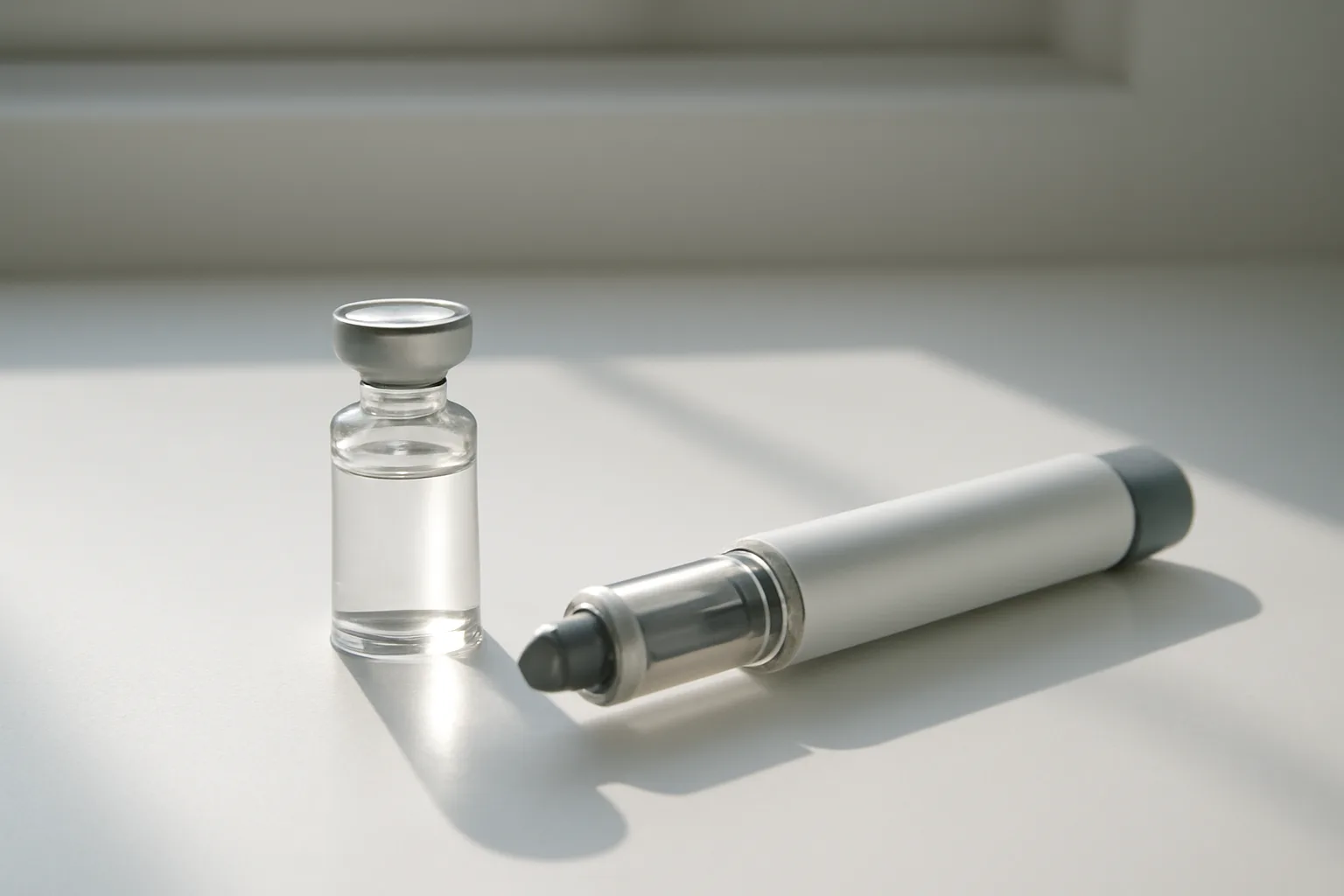
Yes. PT-141 and Vyleesi are both bremelanotide, a synthetic peptide that activates melanocortin receptors in the brain to increase sexual desire and arousal [1]. The FDA approved bremelanotide in June 2019 under the trade name Vyleesi for acquired, generalized hypoactive sexual desire disorder (HSDD) in premenopausal women [2]. PT-141 is the research code name that stuck in popular use, especially in the compounding and peptide research world. When you see PT-141 advertised by a compounding pharmacy or online peptide vendor, you're looking at bremelanotide prepared outside the branded manufacturing line. The molecule is the same. What differs is manufacturing oversight, packaging, dosing precision, and legal status. Vyleesi comes as a 1.75 mg subcutaneous autoinjector. It's manufactured by Palatin Technologies under current Good Manufacturing Practice (cGMP) standards and distributed by AMAG Pharmaceuticals (now Covis Pharma) [2]. Every batch is tested, and the product is tracked under post-market surveillance. PT-141 from a compounding pharmacy is mixed to order, usually from bulk bremelanotide powder. Some 503B outsourcing facilities and 503A pharmacies prepare it; these are FDA-registered but not subject to the same pre-market approval or batch release testing as a branded drug [3]. For patients and providers who want the approved product with the trial data and manufacturing chain intact, that's Vyleesi. For those seeking lower cost or custom doses, compounded PT-141 is the path, but you accept that the pharmacy is making it, not the drug company that ran the trials.
How does bremelanotide work, and why is the mechanism relevant here?
Bremelanotide is a melanocortin MC3/MC4 receptor agonist [4]. It works centrally, meaning it acts in the brain, not on blood vessels or genital tissue. The drug crosses the blood-brain barrier and binds to melanocortin receptors in the hypothalamus and other regions involved in sexual motivation [5]. This distinguishes it entirely from sildenafil (Viagra) or other phosphodiesterase-5 inhibitors, which increase blood flow. Bremelanotide increases desire and arousal through neural pathways tied to reward, attention, and emotional salience [5]. The mechanism matters because it sets realistic expectations. Bremelanotide doesn't cause erections in men or direct genital vasodilation in women. It shifts the central processing of sexual cues and motivation. In the phase 3 RECONNECT trials, women taking 1.75 mg bremelanotide reported a mean increase of about 0.3-0.5 points on the Female Sexual Function Index (FSFI) desire domain (a 1.2 to 6 scale) compared to placebo, and a slightly larger improvement in distress scores [6]. The effect size is modest but statistically significant and clinically meaningful for a subset of users [6]. Because the mechanism is central, side effects are also central or autonomic: nausea, flushing, headache, and transient blood pressure changes are common [7]. These happen whether you're using Vyleesi or compounded PT-141, because the molecule and dose are the same. Understanding the mechanism helps you predict what works (anticipatory dosing before sexual activity) and what doesn't (daily use for continuous high desire).
What are the approved dose and administration for Vyleesi?
Vyleesi is dosed at 1.75 mg subcutaneously, injected into the abdomen or thigh at least 45 minutes before anticipated sexual activity [2]. You can take it up to once in 24 hours, and no more than eight doses per month [2]. The autoinjector is pre-filled and single-use. You pinch a fold of skin, press the device, and it delivers the full dose in seconds. The 1.75 mg dose was selected in phase 2b dose-ranging studies that tested 0.75 mg, 1.25 mg, and 1.75 mg [8]. The 1.75 mg dose balanced efficacy (improvement in desire and reduction in distress) against tolerability (nausea rate around 40% in the first dose, declining with repeated use) [8]. Lower doses had less nausea but also less benefit; higher doses were not tested in registration trials [8]. The 45-minute lead time reflects the drug's pharmacokinetics: peak plasma concentration occurs around 1 hour after injection, and the half-life is about 2.7 hours [2]. By 24 hours, plasma levels are low enough that the FDA considered repeat dosing safe, though nausea can persist longer in some users [7]. Vyleesi is specifically approved for premenopausal women with acquired, generalized HSDD [2]. The trials excluded women on psychotropic medications that can alter libido (SSRIs, antipsychotics), women with uncontrolled hypertension, and those with cardiovascular disease [6]. If you don't fit that trial population, your provider may still prescribe it off-label, but the evidence base is narrower.
How is compounded PT-141 different in formulation and dosing?
Compounded PT-141 is usually supplied as a lyophilized (freeze-dried) powder in a vial, which you or your provider reconstitutes with bacteriostatic water or saline. The concentration varies: some pharmacies provide 2 mg per vial, others 5 mg or 10 mg, and you draw the prescribed dose with an insulin syringe [9]. This introduces variability. You're responsible for accurate measurement, sterile technique, and proper storage (reconstituted peptide typically lasts 28 days refrigerated). Dosing flexibility is the trade-off. Some providers prescribe 1.75 mg to match Vyleesi's approved dose. Others titrate lower (1.0-1.5 mg) to reduce nausea in sensitive patients, or higher (2.0-2.5 mg) for those who tolerate the approved dose well but want stronger effect [9]. There's no published dose-response curve above 1.75 mg, so higher doses are empirical. Anecdotally, 2.0 mg is common in compounding, but nausea risk and blood pressure changes rise. Compounded PT-141 from a 503A pharmacy (the local compounding pharmacy that makes patient-specific prescriptions) or a 503B outsourcing facility (which can make larger batches for office use) is subject to state board oversight and FDA inspection, but the individual batch is not FDA-approved [3]. The pharmacy sources bulk bremelanotide, ideally from an FDA-registered supplier, but the powder itself isn't pre-approved for compounding in most cases. Bremelanotide does not appear on the current FDA 503A bulk substances list (the list of nominated substances under evaluation) [10], so its legal status for 503A compounding is ambiguous. It is used by 503B facilities under the clinical need exemption, meaning the facility asserts there's no adequate commercially available alternative (which is debatable, given Vyleesi exists) [11]. This is a legal gray zone. In practice, compounded PT-141 is available, and many prescribers and patients use it without incident. But you're accepting that the product isn't backed by the same regulatory review, manufacturing controls, or liability chain as Vyleesi. If you have a reaction, the compounding pharmacy is your point of contact, not a pharmaceutical company with deep pockets and a post-market surveillance team.
What's the real cost difference between Vyleesi and compounded PT-141?
Vyleesi lists at about $950-$1,000 per dose without insurance in the U.S. [12]. That's roughly $8,000 to $10,000 per month if you used the maximum eight doses [12]. Insurance coverage is inconsistent. Some plans cover it with prior authorization (often requiring documentation of HSDD diagnosis, failed behavioral interventions, and exclusion of relationship or psychiatric causes), and copays range from $30 to $200 per dose [12]. Many insurers still consider it experimental or lifestyle and deny claims. Compounded PT-141 costs substantially less. A 2 mg vial from a compounding pharmacy typically runs $50 to $150, and if you dose 1.75 mg per use, one vial is good for one injection (maybe 1.1 doses if you draw carefully) [9]. At $100 per vial and eight doses per month, that's $800, or about one-tenth the branded price. Some pharmacies compounding PT-141 offer bulk pricing or subscription models that drop the per-dose cost further. The catch is insurance almost never covers compounded peptides, so you pay cash. For patients, the calculus is straightforward: if your insurance covers Vyleesi at a reasonable copay, the convenience of the autoinjector and the regulatory assurance are worth it. If you're paying out of pocket, compounded PT-141 is one-tenth the price, and you're getting the same molecule. Providers tend to recommend compounded bremelanotide for cost-sensitive patients and Vyleesi for those who want zero fuss or have insurance coverage. There's no published head-to-head trial comparing satisfaction or outcomes between branded and compounded bremelanotide, because the studies all used the branded product [6]. Any claim that one "works better" is anecdotal. Same molecule, same dose, same mechanism, same side effects.
What are the common side effects, and do they differ between Vyleesi and PT-141?
The side effect profile is identical because the molecule is identical. In the RECONNECT trials, nausea occurred in about 40% of women on the first dose of 1.75 mg bremelanotide, dropping to around 13% by the fourth dose [7]. Flushing and injection site reactions occurred in roughly 20% and 13%, respectively [7]. Headache, fatigue, and vomiting were each reported by around 5-10% [7]. Nausea is the limiting side effect. It's typically mild to moderate, starts 30-60 minutes post-injection, and resolves within 2-4 hours [7]. Pretreatment with an antiemetic (ondansetron 4-8 mg, taken 30 minutes before bremelanotide) is common in clinical practice and reduces nausea incidence substantially, though this wasn't formally studied in the trials [9]. Some providers prescribe it routinely with the first few doses. Flushing is melanocortin-mediated: it's a transient increase in skin blood flow and warmth, sometimes with a blotchy rash on the chest and face [7]. It resolves spontaneously. Blood pressure changes are mild: mean systolic pressure increased by about 3-7 mmHg transiently in trials, and diastolic by 2-3 mmHg [7]. This isn't clinically significant for most users, but women with uncontrolled hypertension or cardiovascular disease were excluded from trials, and the drug carries a warning [2]. Compounded PT-141 at the same dose (1.75 mg) has the same side effect rates. If a compounding pharmacy or patient uses a higher dose (say, 2.5 mg), nausea and flushing likely increase, though no one has published that curve. Lower doses (1.0-1.5 mg) anecdotally reduce side effects but also reduce efficacy. There's no meaningful difference in tolerability between Vyleesi and compounded PT-141 at equivalent doses [7]. One difference: injection site reactions are slightly less common with Vyleesi's autoinjector (which uses a fine 27-gauge needle in a spring-loaded device) than with manual injection using an insulin syringe, where user technique varies [7]. This is marginal, not a reason to choose one over the other.
Is there any efficacy difference between branded Vyleesi and compounded PT-141?
No published evidence supports a difference. The phase 3 RECONNECT trials tested branded bremelanotide 1.75 mg against placebo in 1,267 premenopausal women with HSDD [6]. At 24 weeks, bremelanotide improved the FSFI desire domain by 0.3-0.5 points more than placebo (baseline ~2.2, placebo ~2.7, bremelanotide ~3.0) [6]. Distress (measured by the Female Sexual Distress Scale-Desire/Arousal/Orgasm) improved by about 10-15 points more than placebo (a 0-60 scale) [6]. Both differences were statistically significant (p<0.001) [6]. These gains are modest in absolute terms. A 0.5-point shift on a 6-point desire scale is noticeable to some women, not to others. The trials also showed high placebo response: about 40-50% of women in the placebo arm reported meaningful improvement, likely from expectation, attention, and relationship context [6]. The drug adds a real but small incremental benefit over that baseline [6]. Compounded PT-141 at 1.75 mg should produce the same effect, because it's the same molecule at the same dose hitting the same receptors. There's no magic formulation difference: bremelanotide is a simple linear peptide (Ac-Nle-cyclo[Asp-His-D-Phe-Arg-Trp-Lys]-OH), and it's stable in aqueous solution once reconstituted [13]. Differences in excipients (Vyleesi uses water, acetic acid, and sodium acetate; compounded versions typically use bacteriostatic saline) don't change absorption or activity measurably [2]. Anecdotally, some patients report that one "works better" than the other. This is likely expectation, timing (Vyleesi's autoinjector is idiot-proof; compounding requires you to draw accurately), or dose creep (some patients using compounded PT-141 drift to 2.0 mg without telling their provider, then report better effect). If you dose compounded bremelanotide at exactly 1.75 mg, injected subcutaneously 45-60 minutes before activity, you're running the same experiment the FDA approved [6]. Responder analyses from the trials show that about 25-30% of women on bremelanotide report "much improved" or "very much improved" on a global impression scale, versus 15-20% on placebo [14]. That's a 10-15 percentage point absolute benefit, number needed to treat around 7-10 [14]. Half of users see little to no benefit [14]. This isn't a wonder drug, but for the responder subset, it's meaningful, and that holds whether you're using Vyleesi or compounded PT-141.
What about quality control and contamination risk?
Vyleesi is manufactured under FDA-enforced cGMP, with every batch tested for potency, purity, sterility, and endotoxin [2]. The autoinjector is hermetically sealed, single-use, and sterile-filled. You open it, inject, and discard. Zero opportunity for contamination if you follow instructions. Compounded PT-141 introduces more variables. The bulk bremelanotide powder comes from a chemical supplier (often overseas, sometimes domestic). Reputable suppliers provide a certificate of analysis (CoA) showing purity (typically 98-99% by HPLC), but that's a single test at the time of synthesis, not ongoing batch verification [9]. The compounding pharmacy reconstitutes the powder using sterile water or bacteriostatic saline, transfers it to vials, and labels it. A good 503B facility does this in a cleanroom under USP <797> sterile compounding standards [15]. A less rigorous 503A pharmacy might do it on a laminar flow hood in a back room [15]. You don't know which unless you ask. Contamination risks are low but nonzero: bacterial contamination from poor aseptic technique, particulate matter from improper filtering, or underdosing from inaccurate mixing. In 2022, the FDA issued warning letters to several compounding pharmacies for failing sterility tests and violating cleanroom protocols [15]. None were specifically about bremelanotide, but the risk applies to any compounded injectable. You mitigate this by choosing a pharmacy with 503B registration (which requires more stringent testing and FDA inspection than 503A), asking for a CoA on the bulk bremelanotide, and ensuring the final vial is sterile-filtered and endotoxin-tested [15]. Many compounding providers now offer third-party testing as an option (you pay extra for an independent lab to verify your vial). This closes the gap with Vyleesi but adds cost and hassle. For the average patient, the contamination risk with a reputable compounding pharmacy is very small, far lower than the risk of nausea or flushing. But it's not zero, and Vyleesi eliminates it entirely.
Can men use bremelanotide, and does the brand vs compounded distinction matter?
Bremelanotide was tested in men with erectile dysfunction in early trials, but those studies were stopped because the drug caused unacceptable blood pressure increases and syncope in men at doses needed for erectile benefit (higher than the 1.75 mg dose approved for women) [16]. The FDA approval is women-only [2]. Despite this, some men use compounded PT-141 off-label for desire and arousal, typically at 1.0-2.0 mg [9]. The melanocortin mechanism is sex-independent: the receptors exist in male and female brains [4]. Anecdotally, men report increased spontaneous erections, heightened arousal, and greater interest in sex, but there's almost no published data [16]. One small 2007 study in men with psychogenic ED showed modest benefit at 20 mg intranasally (a much higher dose than current subcutaneous use), but the side effect rate was high [16]. Vyleesi is not indicated for men, and insurance won't cover it. Compounded PT-141 is the only practical route for male users, and it's entirely off-label. Many providers who prescribe PT-141 for men treat it as experimental and dose conservatively (starting at 1.0 mg). The brand vs compounded distinction is moot here: Vyleesi isn't an option, so compounded is the only game. The safety profile in men isn't well-mapped. The blood pressure concern from early intranasal trials (syncope in about 10% at high doses) seems less prominent with low-dose subcutaneous use, but no one has run a controlled trial [16]. If you're using PT-141 as a man, you're in uncharted territory, and the compounded route is your only access point.
What should you ask your provider about PT-141 vs Vyleesi?
First, confirm the diagnosis. Bremelanotide is approved specifically for hypoactive sexual desire disorder: low desire that causes distress, isn't explained by relationship issues, medical conditions, or medications, and has lasted at least six months [2]. If your low desire is secondary to depression, antidepressant side effects, pain, or relationship conflict, bremelanotide isn't the right tool. Your provider should rule those out first. Second, discuss insurance coverage for Vyleesi. If your plan covers it with a reasonable copay, the branded product is easier: pre-filled, dose-assured, and backed by trial data. Ask your provider to submit a prior authorization. If coverage is denied or the copay is prohibitive (some plans tier it at $300-$500 per dose), compounded PT-141 is the fallback. Third, ask about dosing and titration. If your provider suggests starting at 1.75 mg to match the approved dose, that's standard. If they propose 1.0-1.5 mg to reduce nausea risk, that's reasonable but off-label. If they suggest 2.0 mg or higher without explaining why, ask for evidence or a dose-escalation plan [9]. Fourth, ask about the compounding pharmacy. If you're going the PT-141 route, confirm the pharmacy is 503B-registered or a reputable 503A facility. Ask if they provide a certificate of analysis for the bulk bremelanotide. Ask about sterility testing and endotoxin limits. A good provider has vetted their compounding source and can answer these questions [15]. Fifth, ask about monitoring. Bremelanotide trials excluded women with uncontrolled hypertension or cardiovascular disease [6]. If you have borderline high blood pressure, your provider should measure it before starting and check it after your first few doses. If you experience persistent nausea, severe flushing, or darkening of the skin (hyperpigmentation is a rare melanocortin side effect), report it [7]. Sixth, set realistic expectations. Bremelanotide improves desire modestly in about half of users, meaningfully in maybe a quarter, and not at all in the rest [14]. It's not a magic bullet. If you see no benefit after 4-6 doses, it's reasonable to stop. If you see benefit but can't tolerate nausea, ask about antiemetic pretreatment or dose reduction [9].
Where can you get compounded PT-141, and what are the sourcing risks?
Compounded PT-141 is available from licensed compounding pharmacies (503A and 503B), telemedicine platforms that partner with compounding pharmacies, and peptide research suppliers (legal gray zone). Each route has different oversight, cost, and risk. 503B outsourcing facilities are FDA-registered and inspected, and they can ship across state lines without a patient-specific prescription (they fill practitioner orders for office use or patient prescriptions routed through a provider) [3]. These are the highest-assurance compounding sources. Examples include Empower Pharmacy, Olympia Pharmaceuticals, and others [9]. You need a prescription. 503A compounding pharmacies are state-licensed and fill patient-specific prescriptions. They can't advertise or compound large batches for distribution, and they can't ship across state lines unless both the patient and provider are in-state or the pharmacy has reciprocal agreements [3]. Quality varies widely. A well-run 503A pharmacy with a cleanroom is fine; a small-town shop mixing peptides on a countertop is not [15]. Telemedicine platforms (like Hims, Hers, Maximus, and others) connect you to a provider, arrange a prescription, and fulfill through a partner 503B pharmacy. This is convenient and legal if the platform uses licensed providers and registered pharmacies. Cost is typically $50-$150 per vial [9]. The best place to buy PT-141 in terms of convenience and assurance is a telemedicine service that uses a 503B facility and provides CoAs. Peptide research suppliers (websites selling "PT-141 for research purposes, not for human consumption") are a legal gray area. These suppliers often source bulk bremelanotide from overseas manufacturers, repackage it, and sell it without prescriptions. The purity claims are unverified, the sterility is unknown, and the legality is dubious. The FDA considers this interstate commerce of an unapproved drug, and users risk contamination, mislabeling, or prosecution [10]. You also can't get medical supervision or a prescription this way. I'd avoid this route unless you're genuinely using it for research (say, you're a neuroscience lab studying melanocortin pathways, not dosing yourself). PT-141 sold on Amazon or through e-commerce platforms is almost certainly non-sterile bulk powder or nasal spray of unknown provenance. It's cheap, unregulated, and risky. The FDA has issued warning letters to sellers, and listings disappear and reappear under new names [10]. Don't go this route. The safest compounded PT-141 comes from a 503B pharmacy via a prescription from a licensed provider who has vetted the source. This is legal, traceable, and relatively low-risk. It's not as buttoned-up as Vyleesi, but it's a reasonable middle ground for cost-conscious patients [9].
Frequently asked questions
Is PT-141 legal in the United States?
Bremelanotide is FDA-approved as Vyleesi for hypoactive sexual desire disorder in premenopausal women. Compounded PT-141 from a licensed 503A or 503B pharmacy with a valid prescription is legal under federal and state pharmacy law. Buying PT-141 from research chemical suppliers or online vendors without a prescription is legally ambiguous and carries risk of contamination or mislabeling [10].
Can I use Vyleesi or PT-141 if I'm on an SSRI?
The RECONNECT trials excluded women taking psychotropic medications that can alter libido, including SSRIs, because these drugs can cause or worsen low desire independently [6]. Many providers still prescribe bremelanotide to women on SSRIs off-label, reasoning that the melanocortin mechanism is distinct from serotonin pathways. There's no formal drug-drug interaction, but the efficacy may be lower if the SSRI is the primary cause of low desire [6].
How long does a dose of bremelanotide last?
Bremelanotide reaches peak plasma concentration about 1 hour after injection, and the half-life is roughly 2.7 hours [2]. Subjective effects (increased arousal and desire) last 4-6 hours in most users. The drug is cleared within 24 hours, which is why the maximum dosing frequency is once per day [2]. Some users report a lingering "glow" the next day, but desire enhancement is most pronounced in the first 4-6 hours post-injection.
Does bremelanotide cause weight loss?
Early studies showed modest weight loss in some users (mean 1-2 kg over 12 weeks in obese women given daily bremelanotide), likely due to melanocortin-mediated appetite suppression and nausea [17]. However, the approved once-per-event dosing for HSDD (maximum eight doses per month) doesn't produce meaningful weight loss. Nausea from each dose might suppress appetite transiently, but this isn't a weight-loss drug at the approved regimen [17].
Can I take bremelanotide daily for continuous desire?
No. Bremelanotide is approved for on-demand use, up to once per day and no more than eight times per month [2]. Daily dosing wasn't tested in the approval trials and likely increases side effect burden (nausea, flushing, blood pressure changes) without clear benefit. The melanocortin mechanism is event-driven, not a steady-state enhancement of baseline desire [2].
What happens if I inject too much PT-141?
Overdose data is limited because the trials capped dosing at 1.75 mg and excluded accidental high doses. Melanocortin agonism at high doses can cause severe nausea, vomiting, flushing, hyperpigmentation, and blood pressure spikes. In men, early intranasal trials at doses above 10 mg caused syncope in about 10% [16]. If you accidentally inject a multi-dose amount (say, 5-10 mg), seek medical evaluation. Symptomatic treatment (antiemetics, fluids, blood pressure monitoring) is the standard approach.
Is there a generic version of Vyleesi?
No. Vyleesi (bremelanotide) is still under patent protection, and no FDA-approved generic exists as of 2025. Compounded PT-141 is effectively a "generic" in that it's the same molecule, but it's not FDA-approved and doesn't go through the same manufacturing and testing pipeline as a true generic [2].
Can I use PT-141 if I'm postmenopausal?
The FDA approval for Vyleesi is specific to premenopausal women with HSDD [2]. The trials did not include postmenopausal women, so efficacy and safety in that population aren't well-characterized. However, the melanocortin mechanism is independent of estrogen status, and some providers prescribe bremelanotide off-label to postmenopausal women. There's no biological reason it wouldn't work, but the evidence is anecdotal [6].
Does bremelanotide interact with alcohol?
The prescribing information for Vyleesi doesn't list alcohol as a contraindication or interaction [2]. However, alcohol can lower blood pressure, and bremelanotide causes transient blood pressure changes, so combining the two might increase the risk of lightheadedness or syncope. Moderate alcohol intake (one to two drinks) is likely fine, but heavy drinking around the time of injection is riskier.
Can I use PT-141 if I have high blood pressure?
Bremelanotide causes a transient increase in blood pressure (mean 3-7 mmHg systolic, 2-3 mmHg diastolic) [7]. Women with uncontrolled hypertension (systolic above 140 or diastolic above 90) were excluded from the trials [6]. If your blood pressure is controlled on medication, bremelanotide is likely safe, but your provider should measure your blood pressure before starting and after your first few doses [6]. If you have a history of cardiovascular disease, discuss it explicitly.
How do I store reconstituted PT-141?
Reconstituted bremelanotide (compounded PT-141 mixed with bacteriostatic water or saline) should be stored in the refrigerator at 2-8°C (36-46°F) and used within 28 days [9]. Vyleesi autoinjectors are stored at room temperature until use and are single-dose, so no storage after opening [2]. Don't freeze either product; freezing can denature the peptide and reduce potency.
Is bremelanotide addictive?
No. Bremelanotide is a peptide, not a controlled substance, and it has no abuse potential. It doesn't produce euphoria, tolerance, or withdrawal. The FDA did not classify it as a scheduled drug [2]. Some users report psychological dependence in the sense that they rely on it for sexual confidence, but that's not pharmacological addiction.
Can I get PT-141 through my regular doctor, or do I need a specialist?
Any licensed physician, nurse practitioner, or physician assistant can prescribe bremelanotide (Vyleesi or compounded PT-141) if they're comfortable diagnosing and treating HSDD. You don't need a specialist, but many primary care providers aren't familiar with bremelanotide yet. Sexual medicine specialists, gynecologists, urologists, and some psychiatrists prescribe it regularly. Telemedicine platforms specializing in sexual health (Hims, Hers, Maximus, etc.) also connect you to prescribers who are experienced with PT-141 [9].
Does insurance cover PT-141 or Vyleesi?
Insurance coverage for Vyleesi is inconsistent. Some plans cover it with prior authorization (requiring documentation of HSDD diagnosis, failed non-drug interventions, and absence of contraindications), and copays range from $30 to $500 per dose [12]. Many insurers classify it as experimental or lifestyle and deny claims. Compounded PT-141 is almost never covered by insurance, so it's typically a cash-pay product at $50-$150 per vial [9].
Sources
- Nature Reviews Endocrinology, 2023: Bremelanotide is a melanocortin MC3/MC4 receptor agonist that works centrally to modulate sexual motivation and arousal.
- Drugs, 2019 (Bremelanotide: First Approval): The FDA approved bremelanotide (Vyleesi) in June 2019 for hypoactive sexual desire disorder in premenopausal women at a dose of 1.75 mg subcutaneously, up to once per day and eight times per month, with peak plasma concentration at 1 hour and a half-life of 2.7 hours.
- 21 U.S.C. 353a (pharmacy compounding statute): Compounded drugs from 503A and 503B facilities are subject to FDA registration and state oversight but are not pre-approved as branded drugs are.
- CNS Spectrums, 2022 (neurobiology of bremelanotide): Bremelanotide acts on melanocortin receptors in the hypothalamus to increase sexual desire through central neural pathways, distinct from peripheral vascular mechanisms.
- Neurology International, 2022: Bremelanotide crosses the blood-brain barrier and modulates reward, attention, and emotional salience pathways tied to sexual motivation.
- Obstetrics and Gynecology, 2019 (RECONNECT trials): In two phase 3 trials of 1,267 premenopausal women with HSDD, 1.75 mg bremelanotide improved FSFI desire domain by 0.3-0.5 points and distress scores by 10-15 points more than placebo over 24 weeks, with exclusion of women on psychotropic medications, uncontrolled hypertension, or cardiovascular disease.
- Journal of Women's Health, 2022 (Safety Profile): Nausea occurred in about 40% of women on first dose of 1.75 mg bremelanotide, declining to 13% by fourth dose, with flushing in 20%, injection site reactions in 13%, and transient blood pressure increases of 3-7 mmHg systolic.
- The Journal of Sexual Medicine, 2019 (phase 2b dose-ranging): Phase 2b trials tested 0.75, 1.25, and 1.75 mg doses of bremelanotide, with 1.75 mg selected for phase 3 based on balance of efficacy (desire and distress improvement) and tolerability (nausea rate around 40%).
- Expert Opinion on Pharmacotherapy, 2023: Compounded PT-141 is typically supplied as lyophilized powder reconstituted by the patient, with variable concentrations (2-10 mg per vial), dose flexibility (1.0-2.5 mg), and cash pricing of $50-$150 per vial.
- FDA, bulk drug substances nominated for use in compounding: Bremelanotide does not appear on the current FDA 503A bulk substances nomination list, and its legal status for 503A compounding is ambiguous.
- 21 CFR 216.24 (503B Bulks List): 503B facilities may compound from bulk substances under the clinical need exemption when no adequate commercially available alternative exists.
- The Annals of Pharmacotherapy, 2020: Vyleesi lists at approximately $950-$1,000 per dose without insurance, with inconsistent insurance coverage, copays ranging from $30 to $200, and many plans denying claims as experimental or lifestyle.
- Biomolecules, 2022 (Ligands for Melanocortin Receptors): Bremelanotide is a stable linear peptide (Ac-Nle-cyclo[Asp-His-D-Phe-Arg-Trp-Lys]-OH) that remains active in aqueous solution once reconstituted.
- Journal of Women's Health, 2022 (RECONNECT subgroup analyses): Responder analyses showed 25-30% of women on bremelanotide reported 'much improved' or 'very much improved' on global impression scale versus 15-20% on placebo, with number needed to treat around 7-10.
- 21 CFR 216.23 (503A Bulks List and compounding standards): Compounding pharmacies are subject to USP <797> sterile compounding standards, with 503B facilities requiring stricter testing and FDA inspection than 503A facilities.
- Current Topics in Medicinal Chemistry, 2007: Early trials of bremelanotide in men with erectile dysfunction were stopped due to unacceptable blood pressure increases and syncope at doses above 10 mg intranasally; FDA approval is women-only.
- Diabetes, Obesity & Metabolism, 2022: Phase 1 studies in obese women showed mean weight loss of 1-2 kg over 12 weeks with daily bremelanotide, likely due to melanocortin-mediated appetite suppression and nausea, but the approved once-per-event dosing does not produce meaningful weight loss.